


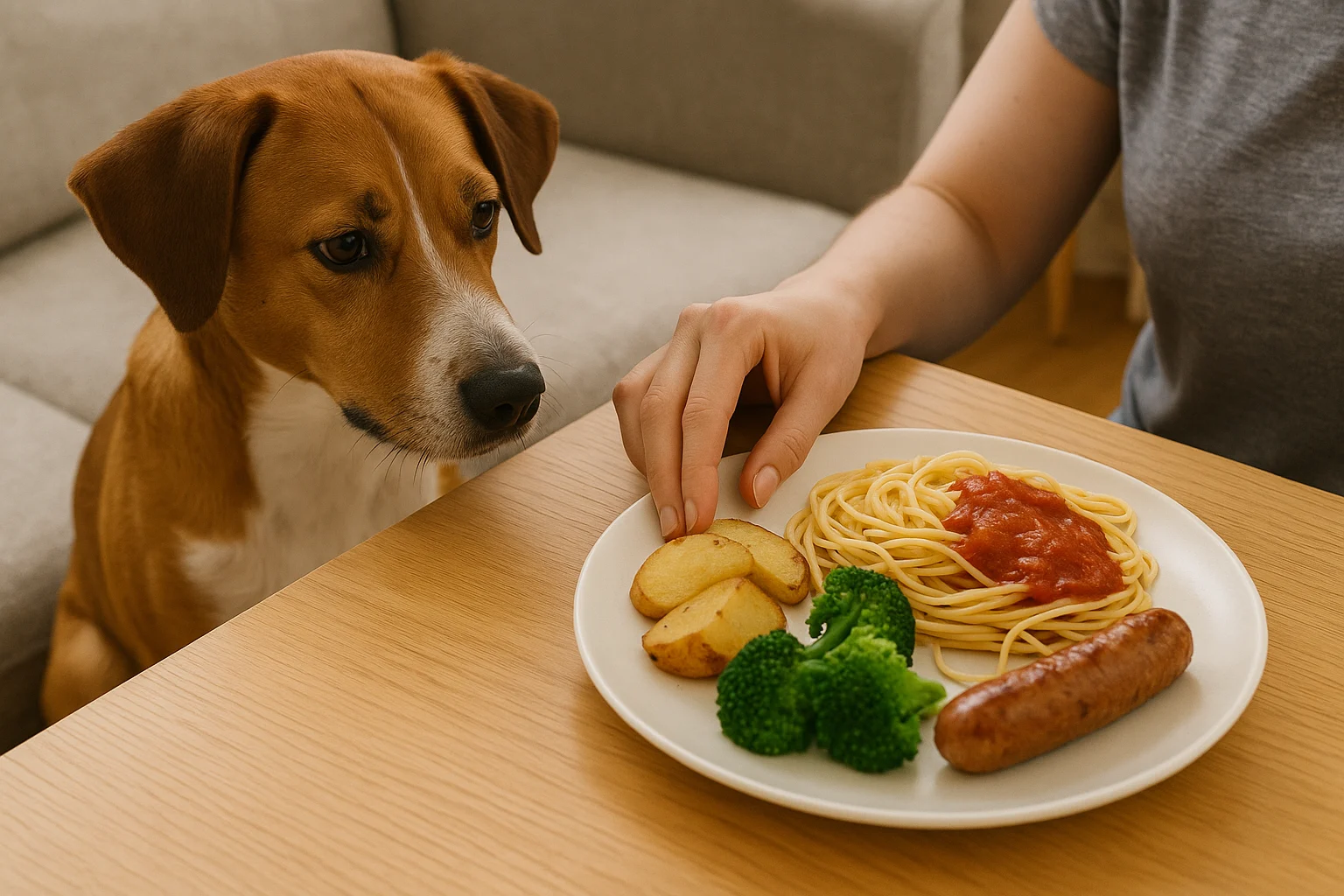
You’re eating dinner, your dog’s watching with those eyes, and you think, “Just a little won’t hurt, right?” It’s a question almost every dog owner has asked. Here’s a straight-up answer that doesn’t beat around the bush.
Can you feed dogs human food?
Some human foods are safe for dogs if they’re plain, cooked, and given in small amounts. But many others are toxic, high in salt, or bad for the stomach. So it’s not about whether—it’s about what, how, and how much.
Feeding your dog scraps from the table sounds harmless until you clean up vomit or call the vet at midnight. Some foods help their health, some cause slow damage, and others hit hard within minutes.
When human food is safe
There are human foods that are safe and good for your dog when given the right way. The key is to keep it simple. If it’s fresh, plain, and unprocessed, it’s fine in moderation.
Cooked lean meat
Chicken, turkey, and beef are excellent sources of protein. Boil or bake them, skip the salt and spices, and make sure there are no bones. Bones, especially cooked ones, can break into sharp pieces and tear your dog’s insides.
Stick to small pieces. Too much meat can throw off your dog’s regular food balance.
Plain rice or pasta
When your dog’s stomach is upset, vets often suggest plain boiled rice or pasta. It’s easy to digest and gives them energy. But it’s not a meal by itself—pair it with protein.
Veggies like carrots and green beans
These are low-cal, crunchy, and full of fibre. They help dogs feel full without piling on pounds. Cut them into bite-sized chunks so they don’t choke.
Raw is OK for most veggies, but steam them if your dog’s not chewing well.
Fruits like apples and blueberries
Fruits are sweet, loaded with vitamins, and usually safe. Just remove seeds, pits, and tough skins. A few slices of apple or a handful of blueberries now and then work great as snacks.
Bananas and watermelon are fine too—avoid giving too much sugar at once.
Peanut butter (but check the label)
Dogs love peanut butter. Just make sure it doesn’t contain xylitol, an artificial sweetener that can kill dogs fast. Go with plain, unsalted peanut butter and only give a spoonful at a time.
It’s great for hiding pills or making treat time fun, but don’t go overboard.
When it’s a bad idea
Here’s where things get tricky. You might mean well, but certain human foods can be dangerous—or even deadly. Others cause long-term problems like weight gain, picky eating, or stomach trouble.
Toxic foods you should never give
Some foods are off-limits no matter what. Even a small bite can cause big trouble.
- Chocolate
- Grapes and raisins
- Onions and garlic
- Alcohol and caffeine
- Foods with xylitol (often in sugar-free gum, peanut butter, or baked goods)
- Raw dough
- Cooked bones
These can damage your dog’s kidneys, nervous system, or digestive tract. You might not see the signs immediately, but the damage builds up quickly.
Salty, greasy, and fatty foods
Nothing like bacon, fried chicken, sausages, or anything dripping in oil is too much for your dog’s system. These can lead to vomiting, diarrhoea, or worse—pancreatitis.
Even cheese and dairy should be limited. Some dogs are lactose-intolerant and don’t show symptoms until they’re uncomfortable.
Feeding from the table
Doing this often turns your dog into a beggar. They stop eating their food and wait for yours. That’s when health problems and bad habits start to stack up.
Once they learn that crying or barking gets them chicken or rice, they’ll skip their balanced food, and their bodies will miss out on what they need.
Feeding human food the right way
If you feed human food, do it like a treat, not a replacement. Here’s how to get it right:
- Keep it under 10% of your dog’s daily calories
- Avoid seasoning, oil, and butter
- Chop food into small pieces
- Watch how your dog reacts after trying something new
- Never swap human food for proper dog food without checking with your vet
Think of it like snacks for kids. A cookie occasionally doesn’t hurt, but you wouldn’t give a child just cookies for dinner.
Bottom line: stick to simple, safe choices
Some human foods are safe for dogs, and a few add value to their diet. But you’ve got to be thoughtful about what you give and how much you offer. Stick to plain, cooked food in small amounts, and always check for harmful ingredients first.
If you’re not sure, don’t guess. Ask your vet. One quick call could save you a whole lot of stress.
Want your dog to enjoy a treat? Go with something you’d trust to eat yourself—fresh, clean, and easy to digest. They don’t need fancy flavours or sauces. They need you to care about what goes into their bowl.