


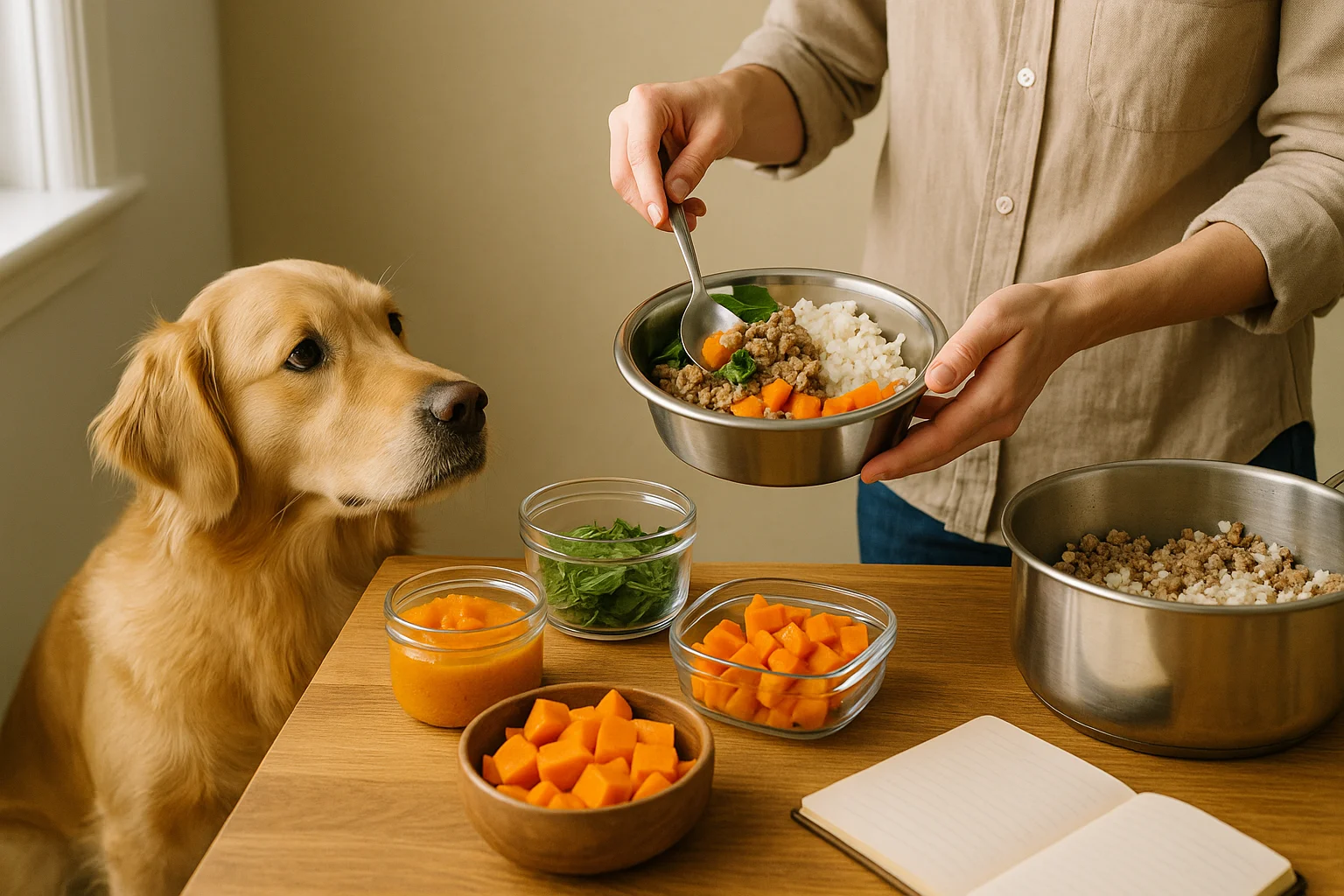
Making your dog’s meals at home sounds like a sweet idea. You know exactly what’s going into the bowl, and it feels like you’re doing something special. But is it better than the bag of kibble? Let’s break it down, no fluff.
Why do people switch to homemade dog food?
Pet owners often switch to homemade dog food because they’re worried about fillers, allergies, and not knowing what’s in store-bought brands.
Some people don’t trust premium dog food. Maybe they saw a recall or noticed their dog itching all the time. Others want to offer fresh ingredients they can see and touch. It’s common for people to try homemade meals after a vet suggests it for health reasons like kidney issues, stomach troubles, or food sensitivities.
Cooking at home gives them full control. They can pick lean meats, avoid grains, skip preservatives, and add vegetables their dogs enjoy. For dogs with allergies, this can sometimes solve problems quickly. Some owners also feel closer to their pets when they prepare meals by hand.
But good intentions alone don’t make it right. And skipping key nutrients can backfire fast.
What are the pros of making your dog’s food?
Homemade dog food gives you full control over the ingredients, which is helpful when your dog has allergies, picky eating, or digestion issues.
You choose everything from the type of meat to the cooking oil. This means no more reading labels or wondering what “animal meal” is. You can skip preservatives, dyes, and corn-based fillers.
If your dog has health conditions like diabetes or kidney problems, homemade food makes adjusting protein, fat, and carbs easier. You’re not stuck hoping a bag of kibble fits your vet’s advice.
You’ll also notice the food is fresher. It smells better, looks better, and might excite your picky dog at mealtime. Some owners say their dogs’ energy levels improve and their coats look shinier. While that’s not guaranteed, fresh food doesn’t hurt.
What can go wrong with homemade dog food?
Homemade dog food can cause health issues if it lacks nutrients, contains toxic ingredients, or isn’t portioned correctly.
The most significant danger is nutritional imbalance. Dogs need specific amounts of protein, fats, vitamins, and minerals. Miss one, and things go downhill. Too much liver, for example, can cause vitamin A toxicity. Too little calcium? Weak bones.
Time is another issue. You’ll be prepping, cooking, storing, and measuring food every few days, which can get old fast, especially if you have a busy life.
Money adds up, too. Buying fresh meats, supplements, and safe vegetables isn’t cheap. It’s usually more expensive than a high-quality kibble. And if you’re guessing portions or skipping vet advice, the vet bills can be even worse later.
Some people also feed dangerous ingredients without realising it. Onions, garlic, raisins, and nuts are toxic to dogs. A quick internet search isn’t always enough.
How do you make sure it’s safe and balanced?
The safest way to make homemade dog food is to follow a vet-approved recipe, use supplements, and watch your dog’s weight and energy.
Start by talking to your vet or a canine nutritionist. They’ll help you understand your dog’s needs based on age, breed, weight, and health. Don’t use recipes from blogs or TikTok without checking if they’re complete. Most are missing key nutrients.
Dogs need a careful mix of protein, fat, fibre, calcium, phosphorus, and other vitamins. Even if you cook with meat and veggies, your dog might need added zinc, B12, or omega oils. These are things you can’t just guess.
Use dog-safe supplements that fill in the gaps. Don’t just give human multivitamins.
Track your dog’s weight, mood, stool, and appetite. Any sudden changes are a red flag. If your dog starts shedding more, acting tired, or losing weight, stop and get help. Regular vet checkups are key.
Here’s a basic idea of what goes into a balanced meal:
| Ingredient | Purpose |
|---|---|
| Lean meat (turkey) | Main protein source |
| Brown rice | Carbs and fiber |
| Carrots and peas | Vitamins A, C, and fiber |
| Fish oil | Omega-3 for skin and joints |
| Calcium powder | Bone support |
This isn’t a complete recipe. It’s just a peek at how many pieces go into the puzzle.
So, is homemade dog food really good?
Homemade dog food can be good if done right, but it’s risky without expert help and is not automatically healthier than commercial food.
It depends on how well you plan. If you work with a vet, use balanced recipes, and stick to clean ingredients, homemade food can work great. But winging it with cooked chicken and carrots isn’t enough.
For most people, it’s better to mix both worlds. You can cook fresh meals once or twice a week and feed high-quality kibble the rest of the time. That way, you’re not overwhelmed, and your dog stays on a balanced diet.
The biggest mistake people make is assuming natural means safe. But your dog isn’t a tiny human. They need different nutrients, different amounts, and different food rules.
Want to try it? Here’s a simple starter meal
Start small and test how your dog handles it.
Turkey and Veggie Bowl
- 1 cup cooked lean turkey
- ½ cup steamed carrots
- ½ cup cooked brown rice
- 1 tsp fish oil
- 1 calcium supplement (vet-approved)
Let it cool before serving. The next day, watch your dog’s stool and energy. If things look good, keep going, but talk to your vet before turning this into a regular meal.
Homemade food isn’t a shortcut to better health. It takes thought, time, and guidance. But if you’re ready to put in the effort, it can be a great way to care for your dog in a more personal way.
If you’re not sure, start by improving your current dog food. Add toppers like bone broth or veggies. Or rotate in one homemade meal per week and see how your dog responds.
One meal won’t make or break your dog’s health. But long-term habits will.