


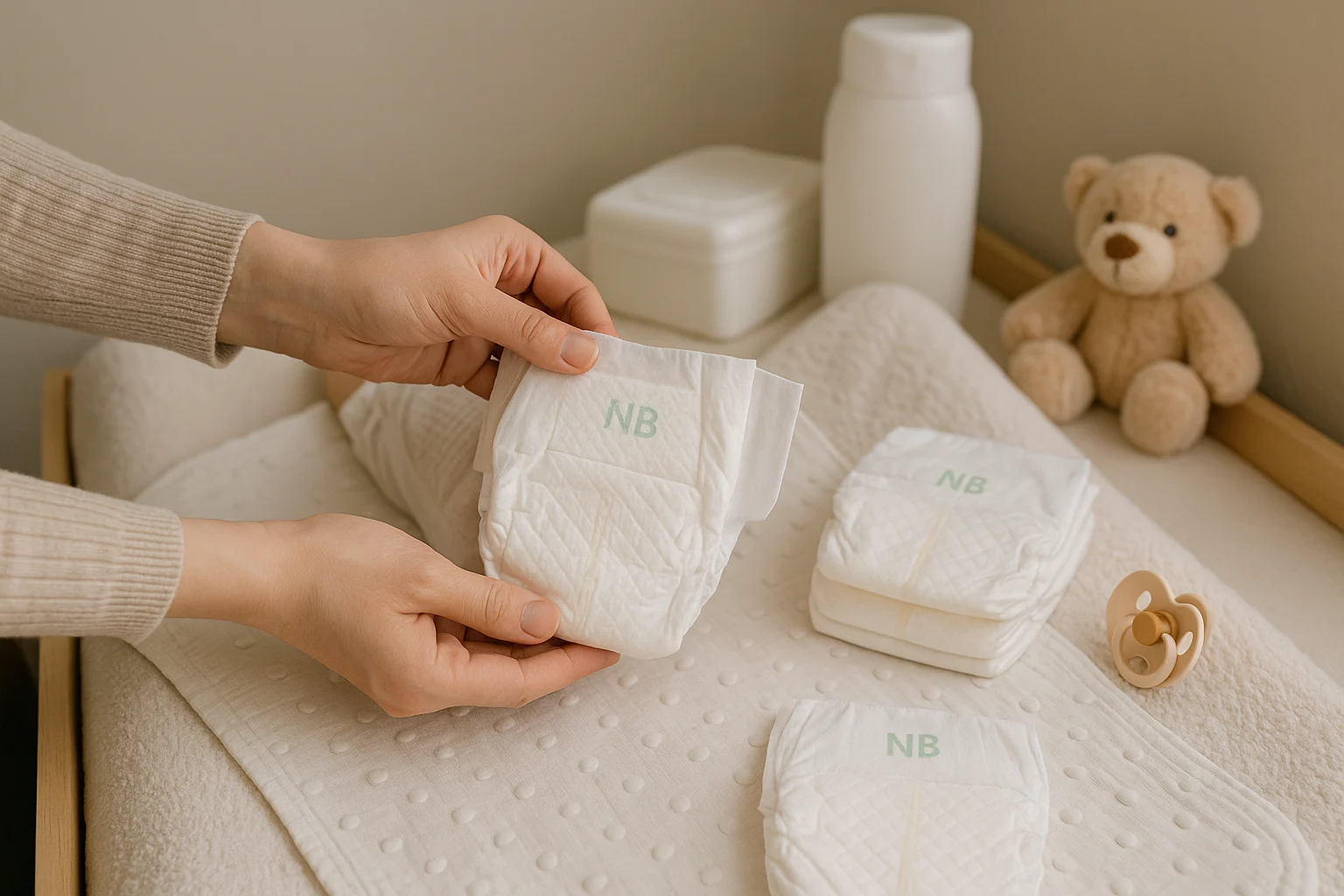
Newborns come with a lot of surprises. Diapering shouldn’t be one of them. You’re probably wondering if using diapers right from day one is okay, or if it’ll harm your baby’s soft skin. Let’s break it down and get straight to the facts so you know what to expect, do, and avoid.
Is It Safe to Use Diapers for Newborns?
Yes, diapers are safe for newborns as long as you change them often, keep the area clean, and choose a diaper designed for their size.
You don’t need to feel guilty about using diapers on your newborn. Hospitals use them. Paediatricians recommend them. What matters is how you use them. Newborns have super sensitive skin, but diapers aren’t the enemy. Wetness is.
Diapers that stay wet too long cause irritation. That’s when rashes show up. If you check and change diapers regularly, your baby’s skin stays happy. Make sure you’re using newborn-size diapers. They’re made to fit snug around the legs and belly without squeezing. If it leaves a mark, it’s too tight.
Look for baby diapers labelled “hypoallergenic” or “sensitive”, like Pampers diapers and Velona Cuddles. These usually skip the perfumes and dyes that can bother a baby’s skin. Breathable materials also help keep things dry.
Also, always wash your hands before and after every diaper change—not just for the baby’s sake but for yours, too.
How Often Should You Change Newborn Diapers?
You should change your newborn’s diaper every 2 to 3 hours or immediately after they poop. That’s 8–12 diapers a day.
Newborns pee a lot. And they poop even more during those early days. Waiting too long between changes traps moisture and poop against the skin, and that’s what leads to diaper rash.
You don’t need to change the diaper the second a drop of pee lands, but don’t let it sit for hours. Feel the front of the diaper often. If it’s soggy or the wetness indicator has changed colour, it’s time.
Nighttime is the one place where parents try to stretch it. That’s fine as long as the baby’s sleeping peacefully and the diaper’s designed to hold for longer hours. But if they’re awake and wet? Change it—no second guesses.
Have a system. Diaper caddy nearby. Wipes ready. Clean diaper open and waiting. That way, the change is quick and painless for both of you.
What Kind of Diapers Are Best for Newborns?
The best newborn diapers are labelled “newborn size,” made with soft, breathable materials, and free from strong scents or dyes.
Size matters more than you think. A diaper that is too loose will leak. A diaper that is too tight will rub and irritate. Newborn diapers are made to hug your baby’s small body, especially the umbilical stump, which takes a week or two to fall off.
Some newborn diapers even have a cutout in the front so they don’t rub on that area. That’s not just a gimmick. It helps avoid infection and lets air hit the stump.
Skip anything that’s got too much fragrance. A clean baby doesn’t need to smell like a perfume ad. Try a different brand if your baby gets red marks or seems itchy. Sometimes it takes a bit of testing to find the right one.
Another bonus is the wetness indicator. That yellow line that turns blue when baby pees is a sanity-saver during late-night checks.
How to Prevent Diaper Rash in Newborns
You can prevent diaper rash by changing diapers often, keeping the skin dry, and using a protective cream as a barrier.
Diaper rash doesn’t mean you’re doing something wrong. But it’s usually a sign that moisture’s been sitting too long on the skin. The first thing to do is to check more often. The second? Let the skin dry completely before putting the next diaper on.
In the early days, use fragrance-free wipes or warm water and cotton. Pat the area dry; don’t rub.
If your baby’s prone to rashes, use a diaper cream or ointment that contains zinc oxide. That stuff sticks to the skin and acts like a wall between moisture and the baby’s bum.
And here’s something no one tells you — give them some airtime. Let your baby go without a diaper for 5–10 minutes daily. Lay them on a towel and let their skin breathe.
Switching diaper brands may help if the rash keeps coming back. Some babies react to certain materials. Cloth diapers are also an option if you’re dealing with nonstop rashes, but they come with their own rules.
Can Diapers Be Worn Overnight by Newborns?
Yes, diapers can be worn overnight if they’re highly absorbent and checked first thing in the morning or when the baby wakes up.
There’s nothing wrong with letting your baby sleep through the night in one diaper, as long as it’s doing its job. Overnight diapers or those labelled “12-hour protection” hold more liquid and wick moisture away from the skin.
If you’re using a regular daytime diaper at night, you may want to double-check it during night feeds or diaper changes.
Leaks? Go up a size or try a diaper booster pad. Blowouts? Ensure the back waistband is snug and the leg cuffs are pulled out correctly.
For peace of mind, add a waterproof sheet under their crib sheet. That way, a leak won’t ruin your mattress.
Always feel the diaper when you wake up for that early morning feed. If it’s full, don’t wait. A quick change is better than a rash.
Final Word
Newborn diapering doesn’t need to be a guessing game. It just takes a little practice and a lot of checking. Diapers are made for babies of all ages, including the brand-new ones, so use them confidently — keep those changes coming, and you’ll both be fine.