


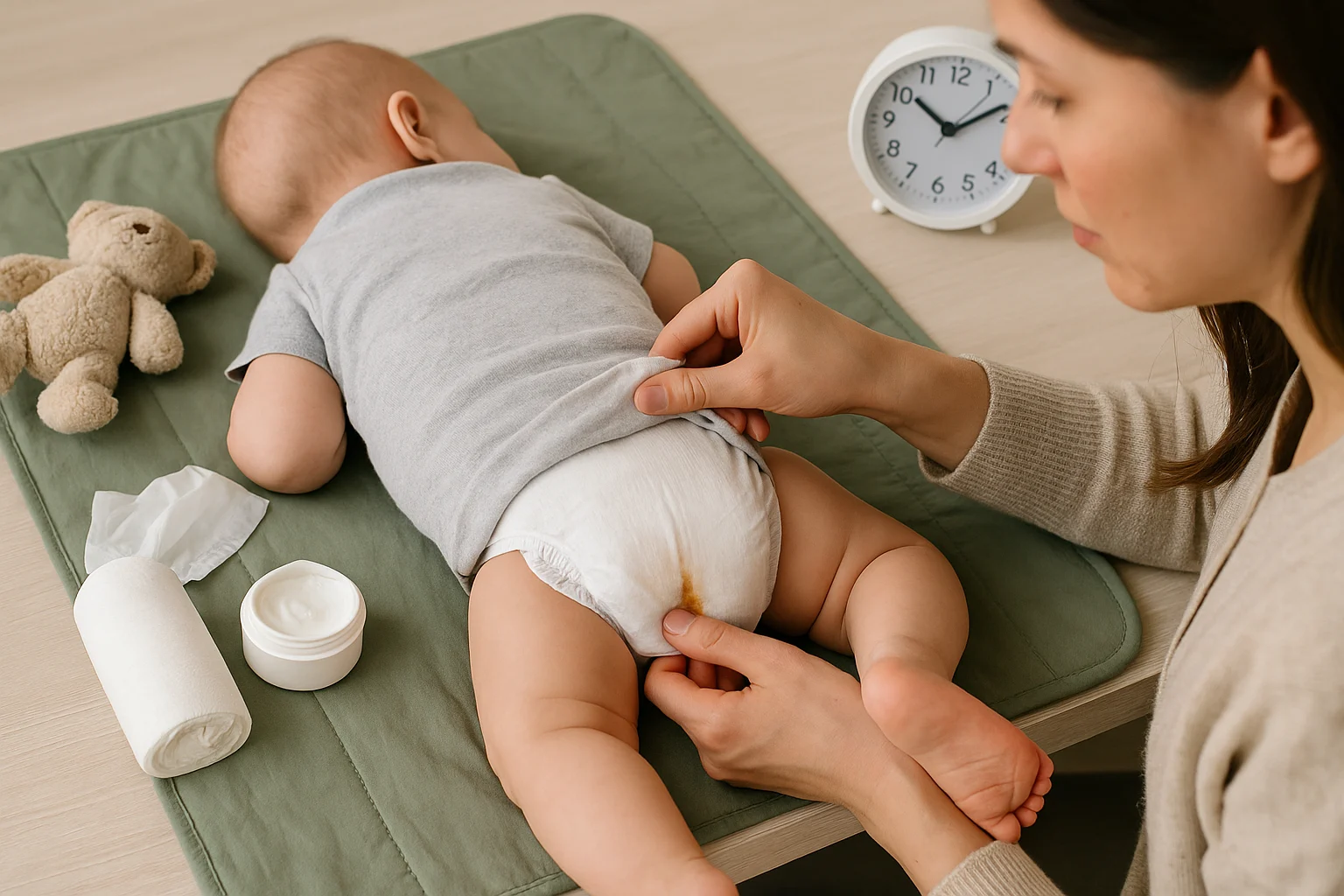
A baby shouldn’t sit in a poopy diaper for more than 5 to 10 minutes, even if they’re sleeping. Stool breaks down quickly and can irritate the skin, causing rashes, burns, or even infections if left for too long.
If you’re in the middle of feeding, in public, or trying to get your baby to nap, you might think a quick wait won’t hurt. But poop isn’t just wet—it’s full of bacteria. The longer it sits, the more it sticks to the skin. Even five minutes can be enough to start a rash if your baby already has sensitive skin.
Nighttime makes it trickier. If your baby poops in their sleep, you might hesitate to wake them. But ignoring it for hours can lead to severe discomfort by morning. Some babies will sleep through it, but their skin won’t.
What happens if you wait too long?
Leaving a baby in a poopy diaper too long causes skin rashes, painful irritation, and possible infections. Babies can’t tell you what hurts, but their skin will show you.
Diaper rash flares up fast
Poop is acidic. It eats away at the protective barrier on your baby’s skin. You’ll first see redness and dry patches. If it’s not cleaned soon, it can turn into angry, open rashes that take days to heal.
Infection can sneak in
Once the skin is raw, bacteria can enter through tiny cracks. This is how yeast or bacterial infections start. They itch, sting, and spread quickly, especially in skin folds.
Pain shows up during changes
If your baby cries every time you wipe them, it could be from sitting in poop too long. The longer you wait, the harder it gets to clean. The skin becomes sticky, and wiping feels like sandpaper. You’re not just cleaning poop—you’re scrubbing an open wound.
Poop in girls can lead to UTIs
For baby girls, the stool can easily move forward and reach the urethra. That’s how urinary tract infections start. A UTI in a baby can cause fever, pain while peeing, and a trip to the doctor.
What if you can’t change them right away?
If you can’t change your baby immediately, keep the delay as short as possible and protect the skin before it happens. Life happens—sometimes you’re stuck in traffic, halfway through dinner, or your toddler’s throwing a tantrum in the other room.
Here’s what helps:
Apply a barrier cream before trouble starts
A good thick layer of zinc oxide cream before bedtime or long outings works like a raincoat. It keeps the poop from soaking into the skin and buys you a little time if you can’t change them instantly.
Keep emergency wipes nearby
Even if you’re not near a full change station, a quick wipe and a fresh diaper can buy you peace of mind until you get home. Toss the dirty one, do a fast wipe, and finish the job later.
Don’t assume they’ll tell you
Some babies don’t cry when they poop. They don’t stop playing. You have to check by smell or feel. If you’re unsure, do a quick peek. One minute now saves hours of rash treatment later.
Nighttime? Use your nose and a soft light
Use a small nightlight in the nursery. If you smell poop, it’s worth waking them gently for a change. Try not to overstimulate. Keep your voice low, don’t turn on bright lights, and use warm wipes if possible.
How to stay on top of poopy diapers
When you’re prepared and can act quickly when needed, you’ll change fewer diapers. Diaper changes don’t need to be dramatic; just make them part of the rhythm.
Build a simple change routine
Check the diaper every 2–3 hours during the day. Glance at it after every feed. If it’s still, look for signs like straining, pushing, or farting. That usually means something’s coming soon.
Use your nose—seriously
You’ll smell it before you see it. Even breastfed baby poop has a unique scent. Once you’ve caught a whiff, don’t wait. That’s your cue to move.
Watch the face
Grunting, scrunching, or going red in the cheeks? They’re working on something. Those cues show up minutes before the diaper needs a change.
Keep gear ready in every room
A backup diaper and wipes stash in the living room, bedroom, and car helps you change faster. If everything’s in one basket, you’re less likely to delay because your hands are full or you’re across the house.
Don’t ignore the wet indicators
Most modern diapers have a line that changes color when wet—but poop doesn’t always trigger it. Use that line as a backup, not your main clue.
Final thoughts
There’s no such thing as a good time to leave a baby in poop. You don’t need to panic every time, but you also can’t afford to wait long. Change as soon as you can. Use cream when you can’t. Watch your baby’s skin like a hawk.