


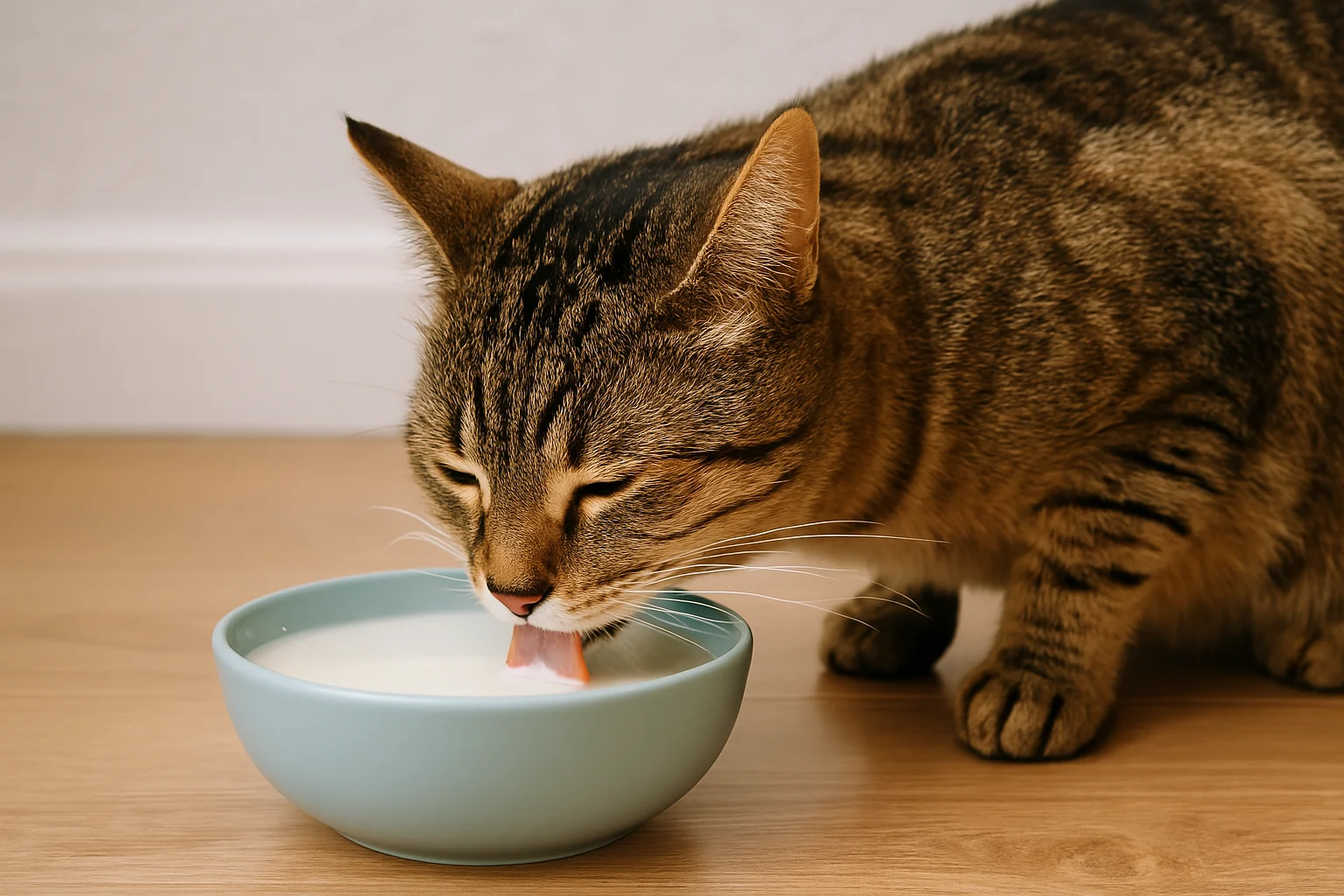
You’ve probably seen cats in movies licking milk from a bowl. It seems cute and harmless, right? But that little habit could be causing more harm than good, especially if you’ve just brought home your first cat.
Can cats drink milk safely?
Most adult cats can’t drink regular milk without getting an upset stomach because they’re lactose intolerant. Even if they like it, milk can cause diarrhoea, gas, or bloating. So, no, it’s not a safe everyday treat.
As kittens, cats drink their mother’s milk, but once they grow up, their bodies change. Like some people, many cats lose the enzyme that helps digest lactose. So when they drink cow’s milk, their stomach doesn’t handle it well. That leads to messes you don’t want to clean up and a grumpy, uncomfortable cat.
You might think a little sip won’t hurt, and sometimes that’s true, but it depends on the cat. Some can take a small amount without problems, but others can’t. It’s like playing food roulette with your pet’s belly.
Why do cats like milk?
Cats like milk because of the fat content. It smells and tastes rich, which draws them in, but that doesn’t mean their body can handle it.
Just because your cat shows interest doesn’t mean it’s good for them. You could put fried chicken on the floor, and your cat might gobble it down, too, but that doesn’t make it healthy.
The smell of cream or full-fat milk reminds cats of protein or meat. Their nose tricks them into thinking milk is good food. That’s why some cats come running when they hear the fridge open or see you pour a glass.
It’s not about the nutrients—it’s about the smell and taste.
Can cats ever have milk?
Some cats can handle small amounts of milk, but it should be rare, in tiny portions, and only if you know your cat can tolerate it.
If you’re dying to give your cat a taste, go slow. Start with a tablespoon. Watch for signs like loose stools, smelly litter, or unusual gas. If your cat reacts badly, don’t try again.
Kittens sometimes tolerate milk better than adults, but that doesn’t mean it’s a good habit to start. Once they’re weaned, their need for milk drops fast, and the risk of stomach problems goes up.
If your cat begs for it and has had it before without issues, you can offer a bit now and then—but think of it more like dessert, not a drink.
What are safe milk alternatives for cats?
The safest option for cats is lactose-free milk. These are made just for pets and are easier to digest.
You’ll find cat-friendly milk at pet stores or even online. Premium brands like Whiskas kitten food or CatSip offer milk without lactose. It tastes similar but skips the ingredient that upsets your cat’s gut.
Don’t use almond, soy, oat, or coconut milk. Those are made for humans and often contain oils, sugars, or additives that aren’t safe for cats.
Even with lactose-free options, keep the portion small. Think of it as a treat—not a daily habit. Too much of any milk, even the pet-safe kind, adds unnecessary calories and can throw off their diet. Focus on more solid food options for cats instead.
Here’s a quick comparison:
| Milk Type | Safe for Cats? | Notes |
|---|---|---|
| Regular Cow’s Milk | No | Causes stomach issues in most cats |
| Lactose-Free Cat Milk | Yes | Made for cats, easy to digest |
| Almond/Soy/Oat Milk | No | Can contain harmful additives |
| Goat’s Milk | Sometimes | Lower lactose, but still risky |
What should cats drink every day?
Cats should only drink clean, fresh water every day. Water keeps them hydrated, supports kidney health, and helps with digestion.
Some cats don’t drink much, which can lead to bladder or kidney problems. So it’s up to you to make drinking water more appealing.
Use a shallow bowl with a wide rim so their whiskers don’t touch the sides. Some cats hate that feeling. Keep the bowl away from their food and litter box. Just like you wouldn’t want your drink next to a toilet, neither do they.
Try a cat water fountain. The sound and movement of running water attract cats. It reminds them of nature, like streams or rain. Many cats that ignore still water will drink more from a fountain.
Change the water daily and clean the bowl or fountain often. Dirty water smells and tastes terrible, and cats won’t touch it.
If your cat still doesn’t drink, feed them wet food. It has more water content than dry kibble and helps with hydration.
Final thoughts
Cats and milk don’t mix like people think. It might feel like a kind thing to offer, but most cats aren’t built to handle it. If you keep giving them milk, you’ll end up with a messy litter box and an unhappy cat.
Stick with clean water, and if you want to spoil them, use safe, lactose-free milk in small amounts. You’ll avoid stomach issues and still keep your cat feeling special.
Having a cat means thinking ahead. Just because they want something doesn’t mean they need it. Trust your gut, learn how their body works, and always choose what keeps them healthy. Your cat won’t know the difference—but their belly will.