


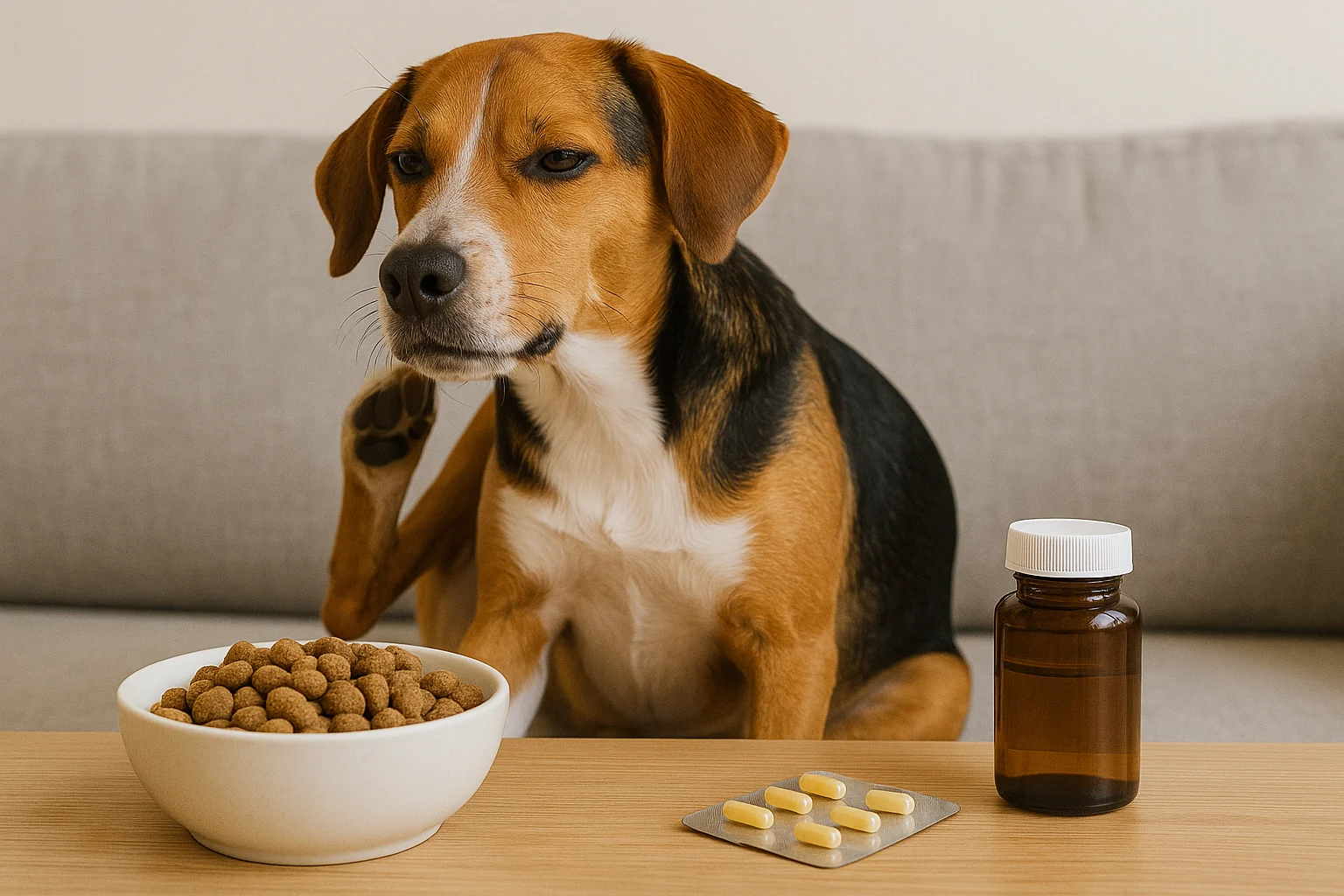
Dogs scratch. They lick their paws. Sometimes they throw up or have diarrhoea, and you chalk it up to something they ate off the ground. But when it keeps happening, there’s a good chance it’s not just a random upset. It might be a food allergy—not just to anything, but to the stuff in nearly every dog bowl.
What’s the most common food allergy in dogs?
Beef is the most common food allergy in dogs, followed by dairy, chicken, wheat, and other proteins they eat every day. The more often a dog eats the same protein, the more likely their immune system will react to it later.
Most owners are surprised that beef tops the list. You see it in dry kibble, wet food, treats, and high-end raw diets. That frequent exposure is what makes it a problem. Over time, a dog’s immune system can start seeing beef as a threat. And once that switch flips, every bite turns into a fight inside your dog’s body.
Chicken is another big one. People switch to it thinking it’s lean and gentle, but it causes the same problems as beef for many dogs. Dairy and eggs also sneak into many pet foods—even treats—so they can cause issues without you realising it.
If your dog’s itching a lot, getting ear infections, or having stomach problems, chances are you’ve already got one of these allergens in the bowl.
What does a food allergy look like?
The signs of food allergies in dogs include constant itching, red or irritated skin, frequent ear infections, soft stool or diarrhoea, vomiting, and licking paws. It’s not always obvious initially, but these symptoms often worsen together and over time.
Skin symptoms: Some dogs show it first in their skin. You’ll see them scratching their ears or rubbing their face into the couch. They might chew their paws until they’re red. You might even find bald patches or flaky skin.
Digestive symptoms: Others show it through digestion. They eat and then throw up a few hours later. Or they get diarrhoea every week. Their poop never really looks firm. Some dogs get gassy, some burp a lot, and others refuse to eat.
Ear symptoms: Another big one? Ear infections. If your dog keeps shaking their head, scratching at their ears, or if you smell something funky, it could be linked to what they’re eating.
What makes food allergies tricky is that they don’t show up immediately. Your dog could eat chicken for years and then suddenly react to it. That’s why many people miss the signs or confuse them with fleas, heat, or anxiety.
How do you confirm it’s the food?
To confirm a food allergy, your dog must have an elimination diet for 8 to 12 weeks. During this time, it should only eat novel protein or hydrolyzed food, with no treats or table scraps.
This part takes discipline. You can’t just guess the allergy and start removing things randomly. You’ve got to strip the diet down to something totally new—something your dog’s never eaten before.
A novel protein might be duck, venison, or even kangaroo. You pair it with a simple carbohydrate like sweet potato or peas. Or you can go with a hydrolysed protein food prescribed by your vet. This type of food breaks proteins down so small that the immune system doesn’t recognise them as a threat.
The key is consistency. You can’t sneak in a bite of cheese or let them lick your plate. One little slip can reset the whole thing.
If the symptoms go away after 8 to 12 weeks, you know food’s the problem. You slowly add one ingredient at a time to determine which causes the reaction.
Some people try blood tests or skin patch tests for food allergies, but they’re not always accurate. The elimination diet is still the gold standard.
How do you treat a food allergy?
The best way to treat a food allergy in dogs is to completely remove the ingredient causing the problem and switch to a long-term diet that doesn’t include it. In some cases, vets may also prescribe medication to help with itching or inflammation during the transition.
Once you figure out the trigger, the fix is simple on paper: don’t feed it again. But you’ve got to be careful. That allergen might appear in treats, flavoured meds, or chew toys with meat-based coatings.
If beef is the problem, switch to fish or duck. If it’s chicken, you might go with lamb or rabbit. Some dogs do best on hydrolyzed formulas for life because they keep their systems calm.
No pill cures a food allergy. But your vet might give you antihistamines or corticosteroids to calm the itching while you’re sorting out the diet. These don’t fix the allergy—they give your dog a break from the symptoms.
Stick to the new food for at least a few months. Let your dog’s skin heal and gut reset. Don’t be tempted to test new treats or rotate meats to give them “variety.” If your dog’s doing better, hold the line.
One last thing: how to keep it from flaring up again
To prevent food allergy flares, you need to avoid the known allergen completely, check every ingredient list carefully, and keep a food log to track any new symptoms if they pop up.
Even a little slip-up can set your dog off again. That means no chicken-flavoured treats if chicken was the issue. No beef broth, no eggs, no cheese. Check everything. Dog food brands change recipes without warning, so check the label whenever you buy a new bag.
If you change foods, do it with your vet. Introduce new ingredients slowly. Just because a brand says “limited ingredients” doesn’t mean it’s safe for your dog.
Keep a notebook or use your phone to track what your dog eats and how they react. If you see a return of symptoms, go back to basics and figure out what might’ve changed.
Most importantly, don’t rush the process. Food allergies are long-term. Once you find what works, stick to it. Your dog doesn’t care if they eat salmon daily—they care that they’re not itchy, sick, or miserable.
Talk to your vet if you’re unsure about an ingredient or reaction. Don’t try to fix it with guesswork or internet advice. Food allergies are manageable when you treat them seriously.
| Allergen | Common Sources | Symptoms | What to Do |
|---|---|---|---|
| Beef | Dry kibble, canned food, jerky treats | Itching, diarrhea, ear infections | Switch to novel protein (e.g. fish or duck), start elimination diet |
| Dairy | Cheese treats, yogurt, baked snacks | Gas, vomiting, soft stool | Remove all dairy, try lactose-free or dairy-free diets |
| Chicken | Most dog foods and treats | Paw licking, rashes, upset stomach | Change protein to lamb or turkey, monitor reactions |
| Wheat | Biscuits, dry kibble, fillers | Skin irritation, frequent bowel issues | Try grain-free or rice-based diets |
| Eggs | Wet food, baked treats | Vomiting, itchy skin | Avoid all egg products, check treat labels |
| Soy | Plant-based dog food, fillers | Skin redness, digestive upset | Switch to soy-free food, stick with meat-based protein |
Always check labels and introduce new foods slowly. Even “limited ingredient” diets can include hidden allergens.