


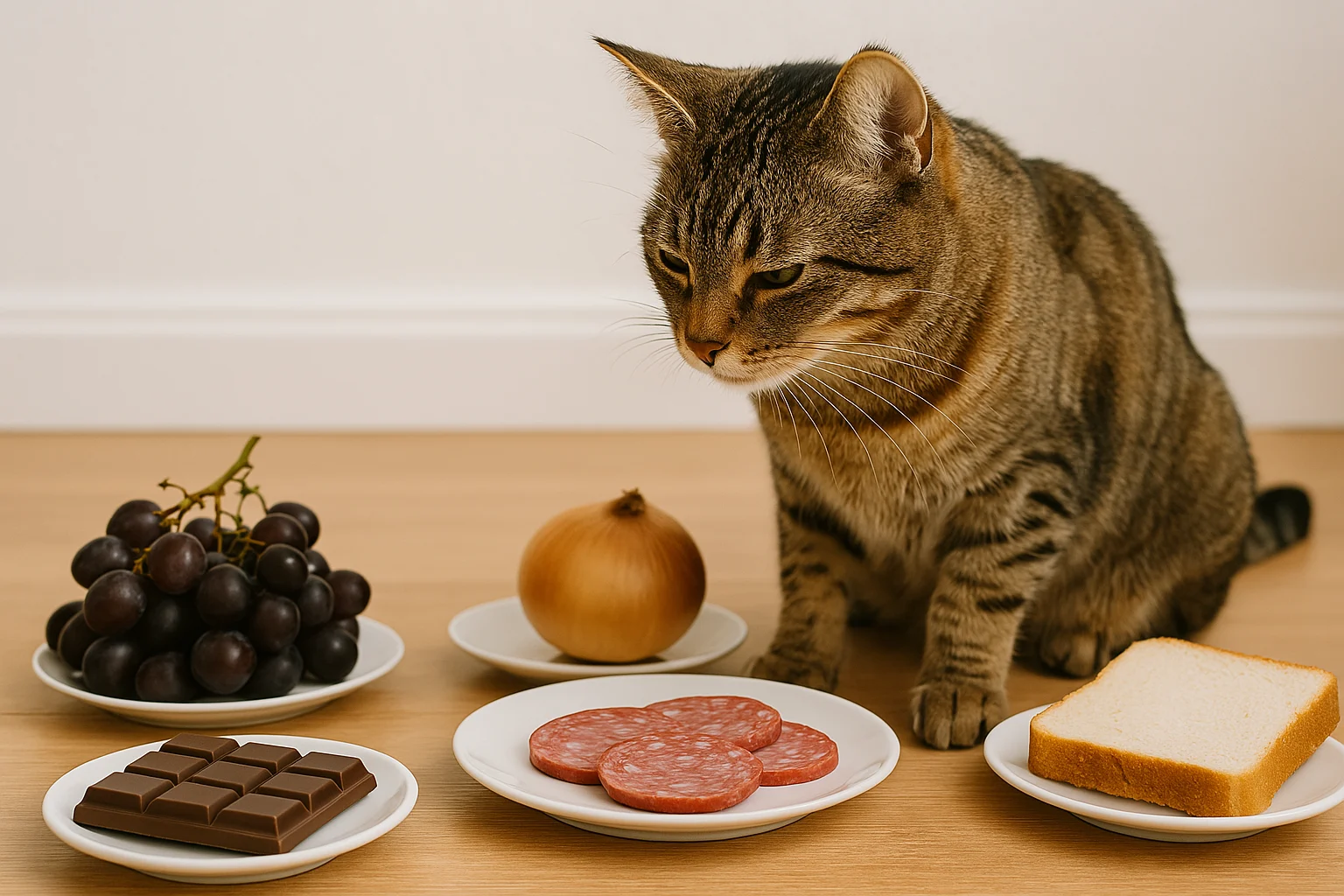
Getting a cat for the first time is fun. But feeding one? That’s where most new cat owners mess up. Not everything you eat is safe for them. Some foods will upset their stomach. Others can land them in the emergency vet.
Why you can’t feed cats just anything
Cats have sensitive stomachs and strict dietary needs. Feeding them the wrong thing can lead to allergies, stomach issues, or even poisoning.
Unlike dogs, cats are picky—and not just by choice. Their bodies can’t break down some foods the way ours can. Even small bits of toxic food can cause problems. You might think giving them a taste of your leftovers is harmless, but that tiny treat could be enough to make them sick.
Cats are what vets call obligate carnivores. That means they need meat. Not rice. Not bread. And not chocolate cake. If something’s not made for cats, chances are it’s best to skip it.
Foods that are straight-up dangerous
Some foods don’t just upset your cat—they can poison them. Here’s what you should never let them eat.
Onions, garlic, leeks, and chives
Allium vegetables, whether raw, cooked, powdered, or dried, are toxic to cats. They destroy red blood cells and can cause anaemia.
Even a little can be harmful over time. Garlic is worse than onion in terms of toxicity. If your cat eats food with any of these, watch for signs like weakness, pale gums, or rapid breathing.
Chocolate and anything with caffeine
Chocolate and caffeinated drinks contain theobromine and caffeine, which are toxic to cats. These can cause tremors, irregular heartbeat, or death.
Dark chocolate is the worst, but any type can harm your cat. Never leave chocolate bars or desserts where your cat can sneak a bite.
Alcohol and raw yeast dough
Cats can’t handle alcohol. Even a tiny amount can shut down their liver. Yeast dough produces alcohol as it rises, which makes it just as risky.
Besides the alcohol risk, raw dough can expand in your cat’s stomach and cause bloating or twisting. That’s a fast track to emergency surgery.
Grapes and raisins
No one knows why, but grapes and raisins can cause cat kidney failure. Just a few can trigger it.
It’s not worth taking the chance. If your cat eats grapes or raisins, don’t wait—call the vet right away.
Milk and dairy
Most cats are lactose intolerant. Milk, cheese, and cream can lead to gas, diarrhoea, and cramps.
Cartoons got it wrong. Cats don’t need milk, and many can’t digest it. Kittens drink their mother’s milk but stop making the enzymes to handle dairy once they grow up.
Raw eggs, meat, and bones
Raw foods can carry bacteria like Salmonella or E. coli. Bones can splinter and cut your cat’s mouth or stomach.
Raw feeding is trendy, but it’s unsafe unless handled perfectly. Even then, the risk often outweighs the benefit. Cooked bones are even worse—they can snap and poke holes in your cat’s insides.
Citrus fruits
Lemons, limes, and oranges contain oils that upset your cat’s stomach and can cause it to drool, puke, or lose its balance.
The smell alone is enough to make most cats gag. Don’t let them near peels or juice; keep cleaning products with citrus scents locked away, too.
Dog food
Feeding cat dog food once or twice isn’t deadly, but it’s not safe as a habit. Dog food lacks taurine, an amino acid cats need to survive.
If your cat keeps stealing from the dog bowl, feed them in separate rooms. Cats need healthy premium cat food which is made with their needs in mind.
What about food allergies?
Sometimes, the food you give isn’t toxic, but your cat still gets itchy or sick. That’s an allergy. And yes, cats can get food allergies, just like people.
Common ingredients that cause allergies
Cats’ most common food allergens are beef, chicken, fish, and dairy. Some also react to eggs, wheat, or lamb.
It sounds strange that meat would trigger it, but cats can get sensitised to anything they eat too often. Just like humans can get hay fever, cats get itchy from what’s in their bowl.
What signs should you look for?
Food allergies usually include itching, scratching, hair loss, vomiting, or diarrhoea.
If your cat’s skin looks red or they keep licking the same spot raw, it could be more than fleas. If they throw up regularly or have runny poop, something in their food might be to blame.
How do you fix it?
The best way to determine the cause is through an elimination diet. A vet can guide you by slowly switching your cat’s food and watching for symptoms.
Don’t try it on your own. You must be strict—no treats, sneaky snacks, or scraps. Just one protein and one carb source for 8–12 weeks. Once the symptoms disappear, you add foods back once a time until the trouble starts again.
Feeding tips for new cat parents
Feeding a cat sounds harder than it is. Just follow a few simple rules, and you’ll be fine.
Buy proper cat food
Good-quality cat food contains all the nutrients cats need. Stick to brands made for cats like Whiskas.
Don’t fall for pretty labels. Look at the ingredients and pick something with meat listed first. If your cat has health issues, get food approved by your vet.
No table scraps
Human food is too salty, too fatty, or just plain toxic. Avoid sharing.
If you want to spoil your cat, get treats made for cats. Don’t hand over pieces of your dinner—even if they give you sad eyes.
Introduce food slowly
New food should be mixed in slowly with the old over 7–10 days to avoid tummy upsets.
Switching too fast causes diarrhoea, even if the food is good. Go slow and watch how your cat reacts before switching entirely.
Talk to your vet
Your vet knows your cat better than the internet. If you’re ever unsure, ask them.
They can spot early signs of allergies or recommend food based on your cat’s age, weight, or health problems.
What to do if your cat eats something bad
Even with the best care, accidents happen. A guest leaves chocolate on the table, or your cat gets into the trash. Here’s what to do.
Spot the danger signs.
Look for vomiting, drooling, weakness, twitching, fast breathing, or seizures. These can all mean your cat ate something toxic.
It sometimes shows up fast and sometimes takes a few hours. If your cat is acting weird and you suspect food, don’t wait.
Call the vet or poison hotline.
Call the vet or a pet poison hotline immediately if you think your cat ate something bad.
Don’t try to make your cat throw up unless a vet tells you to. Some toxins do more damage on the way up.
Keep your home safe
Lock away trash, don’t leave food out, and store cleaning products and treats in closed cupboards.
Think like your cat. If they can jump there, they’ll try. It’s your job to make sure they can’t get into trouble.
Feeding your cat the right way from the start
Feeding a cat isn’t just about filling a bowl. It’s about knowing what keeps them safe. Stick to food made for cats, skip the human treats, and learn the signs when something goes wrong.
You’ll keep your cat healthy. You’ll avoid late-night vet runs. And you’ll have peace of mind whenever you hear that little meow for dinner.