


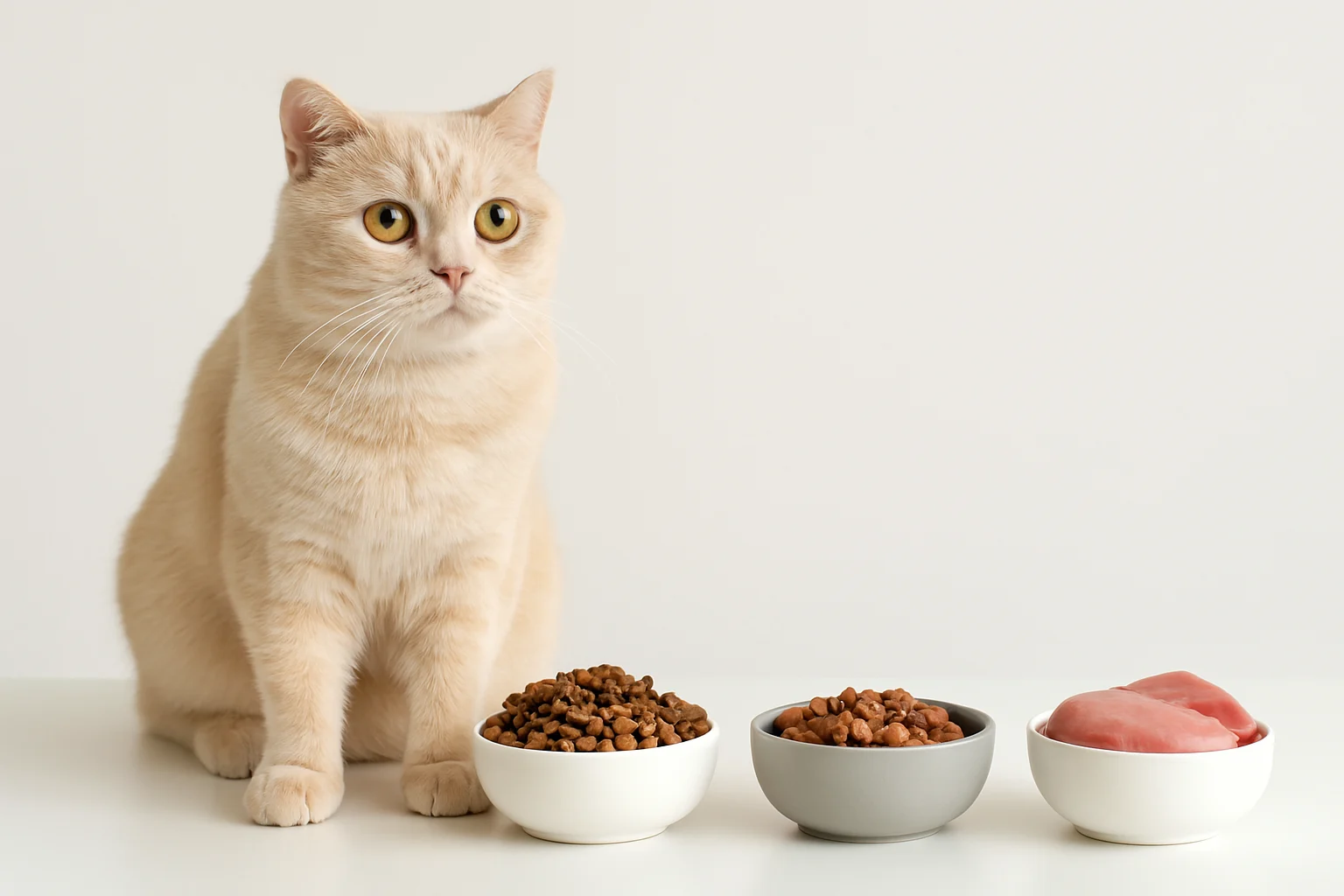
Feeding your cat the right food isn’t tricky, but it’s easy to get wrong if you’re guessing. You don’t need to think. I’ll break it down step-by-step so you’ll know exactly what to feed, how much, and when. There is no extra fluff; it’s just what works.
What do cats need to stay healthy?
Cats need animal-based protein, fat, water, and vitamins and minerals to stay healthy. They can’t survive or do well on plants because they’re natural meat-eaters.
Your cat’s body is built to digest meat. That’s why foods like chicken, turkey, beef, or fish should be the first ingredient. (Try Whiskas cat food) Grain-heavy foods or one whole of fillers won’t give your cat what they need.
Cats also need:
- Taurine – helps with vision and heart
- Arginine – removes waste from the body
- Niacin and Vitamin A – support skin, coat, and organs
If these nutrients are missing or too low, your cat may show signs like a dull coat, tiredness, or stomach trouble.
Wet or dry – which is better?
Wet food is better for hydration, but dry food is easier to handle. If you balance them right, you can feed both.
Cats don’t drink much water, so wet food helps keep their kidneys working right. It’s also easier for older cats or cats with sore mouths to chew. Dry food doesn’t go bad fast, is more affordable, and can help teeth if your cat chews appropriately.
Here’s how they compare:
| Feature | Wet Food | Dry Food |
|---|---|---|
| Water content | High (around 70-80%) | Low (about 10%) |
| Shelf life | Short after opening | Long |
| Dental benefit | Minimal | Some (if chewed well) |
| Cost | Usually more expensive | More affordable |
| Taste | Often more appealing | Less appealing to picky cats |
If you’re gone during the day, dry food in a feeder can help. Just make sure your cat drinks water. Some people mix both types to get the best of each.
Is store-bought food better than homemade?
Store-bought cat food is safer and easier to prepare because it’s balanced, while homemade food requires expert planning to avoid nutrient problems.
Making your cat’s food yourself might feel nice, but it’s not as easy as boiling meat and calling it done. Homemade food often misses key nutrients like taurine or calcium. These gaps can make your cat sick over time.
Most store-bought brands are tested and made to meet cat nutrition needs. Look for labels that say “complete and balanced.” If you want to go homemade, ask your vet or a pet nutritionist to help with the recipe.
What should kittens, adult cats, and seniors eat?
Kittens need high-calorie, protein-rich food. Adult cats need steady calories and protein. Older cats need easy-to-digest food with more water.
Each stage of life needs different food. Kittens grow fast and burn energy quickly. Their food should say “kitten formula” or “for growth.” Adults need calories and protein to stay fit. Seniors may eat less and need soft, gentle food on their stomachs and joints.
Here’s a rough idea:
| Cat Age | What to Feed |
|---|---|
| 0–1 year | High-protein kitten food |
| 1–7 years | Adult cat food, balanced protein |
| 7+ years | Senior food with joint support |
Some brands make food for “all life stages,” but ask your vet if that fits your cat’s needs.
What if your cat has health problems?
If your cat has kidney issues, diabetes, or allergies, they need exceptional food recommended by a vet.
Not every cat can eat the same food. Cats with kidney disease need low-protein, low-phosphorus food. Diabetic cats need low-carb food. Cats with allergies or food issues may need limited-ingredient recipes.
This isn’t something to guess. A quick test at the vet can help determine what’s wrong. Then, they’ll suggest the right type of food, brand, and portion size.
How much and how often should you feed?
Feed adult cats 2 times a day, or leave food out if it’s dry and they don’t overeat. Watch their weight and adjust as needed.
Cats aren’t all the same size, so use the label on the food bag or can as a starting point. Then, keep an eye on your cat. If it’s gaining weight, cut back. If it’s losing weight, feed more. Weigh it once a month if you can.
Wet food goes bad quickly, so don’t leave it out. Dry food can stay out longer, which helps if your cat likes to graze. Just make sure the total calories are right for their size and age.
Should you give your cat treats or supplements?
Treats should be less than 10% of your cat’s daily calories, and most cats don’t need supplements unless a vet says so.
Too many treats can cause weight gain and mess with your cat’s diet. Stick with treats made for cats. Avoid human snacks like cheese or milk—cats can’t digest those well.
Most cat food already has what your cat needs. Extra vitamins or powders can cause problems unless a vet tells you to use them. If your cat has joint pain or a dull coat, a vet might recommend omega-3 or a probiotic, but don’t guess.
Is raw food safe?
Raw food can carry bacteria like salmonella or E. coli, so it’s risky unless you know what you’re doing and follow strict handling.
Some people feed their cats raw food, but it’s not for everyone. It takes careful prep, clean storage, and the right balance of nutrients. If it’s not handled well, it can make your cat or even your family sick.
Some cats may do better on raw diets, but this should only be done under a vet’s care. And never feed cooked bones—they can splinter and hurt your cat’s throat or stomach.
How do you pick a good cat food brand?
Choose cat food with named meat as the first ingredient, no by-products or fillers, and a “complete and balanced” label backed by AAFCO standards.
Avoid brands that list “meat by-product” or “animal meal” without naming the meat. You want real chicken, turkey, beef, or fish as the first ingredient.
Look for:
- Clear meat source
- No artificial colours or sugars
- No corn, wheat, or soy as top ingredients
- “Complete and balanced” on the label
Brands like Hill’s, Royal Canin, Purina Pro Plan, and Wellness often rank high for quality and safety.
Should you ask your vet before changing food?
Yes, your vet knows your cat’s health history and can tell you what food works best.
Even if your cat looks fine, it might have hidden issues. If it’s getting older, drinking more, eating less, or acting up, check with your vet before switching food.
Also, always switch food slowly. Mix the new food with the old one over 7 to 10 days. That keeps your cat’s stomach from getting upset.
What food should you buy?
Pick cat food with real meat, no junk fillers, that fits your cat’s age and health. Use wet food if your cat needs more water, dry food for ease, or both if it works. Always ask your vet for advice.
Feeding your cat isn’t about trends or guessing. Stick with what works for their age, health, and taste. Watch their actions, check their weight, and change things if needed. When in doubt, your vet has the best answers.