


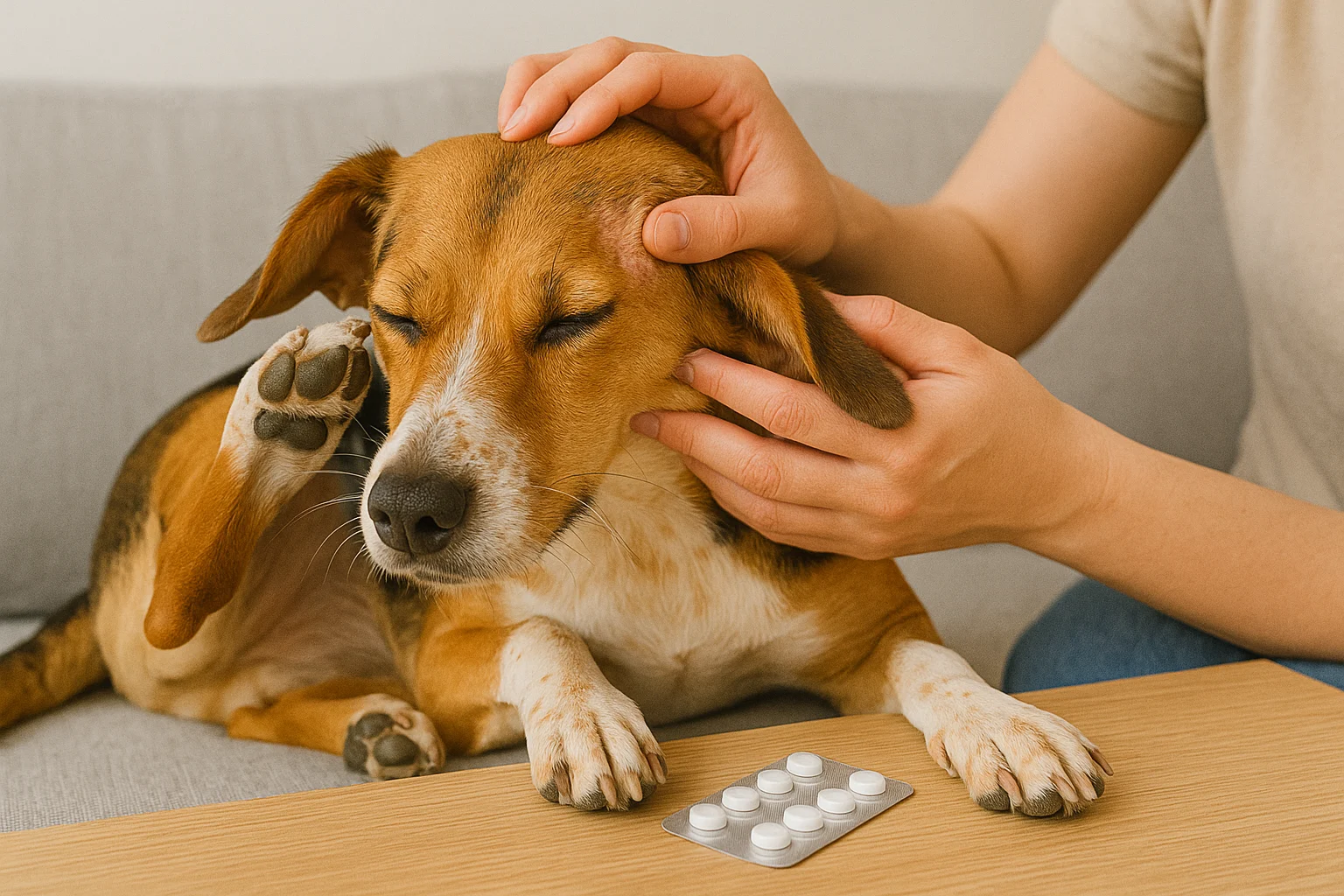
You notice your dog keeps scratching, licking, or shaking its head, and you wonder if it’s just being weird, or if something’s wrong. I’ve been there. It turns out that allergies in dogs are real, and yes, they’re just as annoying for them as they are for us.
What are dog allergies, and why should you care?
Dog allergies happen when dogs’ immune systems react to harmless substances like food, dust, or pollen. These reactions can show up on their skin, in their stomach, or even in their ears.
That means you’re not imagining things if your dog scratches nonstop, sneezes, or has smelly ears. They could be reacting to something around them or something in their bowl.
The tricky part is figuring out what’s triggering it since the symptoms can look like other problems. But the good news is that there’s a way to spot it early.
How to spot the signs (don’t brush them off)
You can spot dog allergies by watching for frequent itching, red or smelly ears, chewing paws, vomiting, or diarrhoea. These signs usually appear more than once and don’t disappear easily.
You’ll want to watch your dog like a hawk. A day of scratching isn’t a big deal, but something’s up if it becomes a routine. Allergies can look different depending on what’s causing them, but most signs fall into a few buckets.
Skin troubles
If your dog’s itching like mad, chewing its paws, or losing fur in spots, there’s a chance the skin is reacting to something. You might also see scabs, flaky patches, or red, irritated spots. This could be caused by pollen, fleas, grass, or even canine food.
Dogs don’t get hives like we do, but they compensate for it with hot spots and constant licking. Check between the toes, around the neck, or near the base of the tail. That’s where allergies love to show up.
Ear problems
Allergy-related ear infections are common. Your dog might shake its head, scratch at its ears, or you’ll catch a whiff of something foul coming from them. If the ear looks red or there’s gunk inside, it’s probably not just dirt.
Chronic ear infections can be one of the biggest giveaways. Vets see them all the time, but they’re often missed until they’re bad.
Tummy issues
Some dogs react to their food with their gut. Diarrhoea, vomiting, gas, and even a weird rumbling sound from the belly can all point to allergies. If you’ve switched foods and the symptoms worsen, it’s time to look closer.
Food allergies often appear as skin and stomach issues, making them harder to spot without a food trial.
When to see a vet (and what they’ll do)
If your dog has repeated itching, ear infections, or tummy problems, you should take it to a vet. The vet will ask about symptoms and may perform tests like blood work, food trials, or skin testing to confirm allergies.
A quick Google search can help you learn, but don’t skip the vet. Only they can tell you if it’s allergies or something more serious. They’ll review your dog’s health history, ask what’s changed recently, and check for obvious signs.
Allergy testing
If your vet suspects environmental allergies (like pollen, dust, or mould), they might recommend a skin or blood test. Skin testing means small amounts of allergens are injected into your dog’s skin to see what causes a reaction. Blood tests look for allergen-specific antibodies.
While blood tests are easier, they’re sometimes less accurate. Most vets combine testing with symptoms and your dog’s history.
Elimination food trial
Food allergies are a different beast. The only way to figure those out is through an elimination diet. You feed your dog a special diet with proteins and carbs they’ve never had before for 8 to 12 weeks—nothing else. No treats. No table scraps.
If the symptoms disappear and come back once the old food returns, bingo. You’ve found the culprit.
It’s long and annoying, but it works.
What happens after diagnosis?
Once your dog’s diagnosed, your vet may suggest avoiding the allergen, switching diets, using meds for relief, or starting allergy shots. The fix depends on the cause, but it’s usually manageable.
Once you know what’s causing the allergy, you’re not stuck. There are options; most dogs do fine once the allergen is avoided or controlled.
Allergen avoidance
If it’s dust or pollen, keep your dog indoors during high seasons, clean their paws after walks, and vacuum more often. If it’s a food allergy, cut that food out completely. You cannot just reduce it—total avoidance is the only way to stop the reaction.
Medication
Sometimes, avoiding the allergen isn’t enough. Vets often prescribe antihistamines or drugs like Apoquel or Cytopoint to reduce itching and calm the immune system. Steroids might be used short-term for bad skin issues.
Don’t try to make your own medication, though. Dogs can’t take what people take, and even over-the-counter stuff can be risky.
Allergy shots
Yes, dogs can get allergy shots, too. These work like human allergy shots—they train the body to stop overreacting to allergens. It takes time, but it’s a solid option for dogs with serious year-round allergies.
Final thoughts: How can you tell?
You’ll know your dog has allergies if symptoms keep showing up—itchy skin, red ears, stomach issues—and it doesn’t respond to regular care. A vet can confirm it with proper testing and help you manage it.
If you’ve noticed your dog isn’t acting like its usual self—scratching more, eating less, or looking uncomfortable-it’s worth digging deeper. Allergies won’t fix themselves and can mess with your dog’s happiness and health over time.
You don’t have to guess. Watch the signs, write them down, and talk to your vet. The sooner you figure it out, the sooner your dog returns to wagging its tail without a care.
Need help tracking symptoms? Start a notebook or use your phone. Please take note of dates, what your dog ate, how they acted, and when they scratched. It can make all the difference in figuring out the pattern.
Your dog can’t speak—but their body sure can. You need to pay attention.