


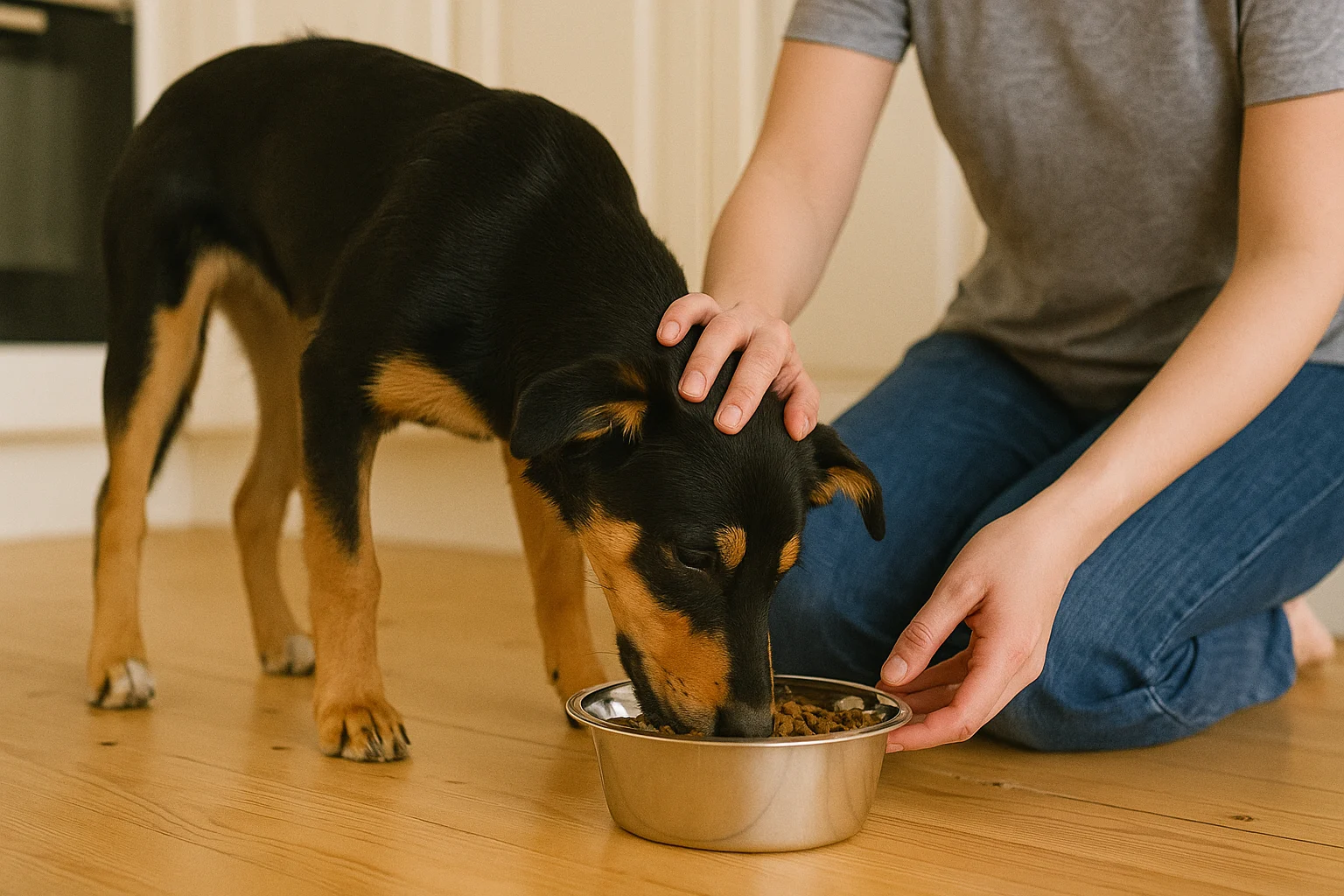
Feeding a dog sounds easy until you realise there’s a wrong way. Give too little, they’re hungry and underweight. Give too much, they get fat and tired. Pick the bad food, and now you’ve got vet bills. Feeding your dog right isn’t guesswork—it’s a routine with rules.
What does feeding your dog the right way mean?
Feeding your dog correctly means giving the right amount of balanced food at the same time every day, based on its size, age, and lifestyle. This keeps its weight healthy, mood stable, and body running like a clockwork.
This isn’t about guessing portions or handing out scraps. A proper feeding routine starts with knowing what your dog needs, not what you feel like giving. It changes depending on age, weight, and health, but the basics are always the same.
How much should you feed your dog?
The right amount to feed your dog depends on their weight, breed, activity level, and the calorie count of their food. You should follow the label, but adjust it based on how your dog looks and acts.
Dog food bags usually give you a starting point. That’s just a ballpark. If your dog looks too skinny—ribs showing, hips poking out—you’re probably underfeeding. You might be giving too much if they’re rounder than usual, or you can’t feel their ribs.
Most adult dogs need 25–30 calories per pound per day. But a lazy couch potato needs less than a dog who runs all day. And treats count. If you’re giving snacks, consider that when you fill their bowl.
Don’t rely on guesswork. Weigh the food, measure it with a cup, and stick to it until your vet says to adjust. Too much guessing leads to chubby dogs with sore joints and short lives.
When should you feed your dog?
Most adult dogs should eat twice a day, once in the morning and once in the evening. Puppies need more frequent meals, and older dogs may need meals split into smaller portions.
Feeding at the same time every day helps your dog’s digestion and behaviour. Dogs are creatures of habit. If breakfast is at 7 a.m. one day and noon the next, you’re throwing off their system.
Puppies need more meals because their stomachs are small and they burn energy fast. Start with four meals a day, then drop to three at around three months, and two by six months.
For adults, two meals a day are enough. One meal might be fine for some dogs, but two is better for avoiding hunger spikes and keeping their blood sugar steady. You may need to split meals for older dogs if they have health issues like diabetes or trouble digesting large amounts.
What should you feed your dog?
You should feed your dog a complete and balanced diet tailored to its life stage and health condition. Choose between dry, wet, or fresh food based on your lifestyle and your dog’s needs.
Dry kibble is easy, affordable, and good for dogs’ teeth. Wet dog food smells better and feels like a treat, but it can spoil fast and is more expensive. Fresh or raw food looks fancier but takes time and planning—and you better get it right, or you’ll miss key nutrients.
Read the label. Look for food that says “complete and balanced” and is approved by AAFCO. That means it meets basic nutrition rules. Don’t buy food because it’s trending or looks fancy in ads.
Puppy food has more fat and protein. Senior food usually has fewer calories and more fibre. Dogs with health issues may need special diets, but you shouldn’t switch unless your vet says so.
Table scraps are not dog food. Some are fine, like plain chicken or cooked carrots. But onions, garlic, chocolate, grapes, and many other things you eat daily can make a dog sick—or worse.
Do’s and don’ts of dog feeding
Stick to measured meals at set times. Don’t leave food out all day or feed from your plate. Keep treats under 10% of daily calories.
If you free-feed—leave the bowl full all day—you’re asking for weight gain and picky eating. Dogs need structure, not a buffet. Measured meals help you track what you eat and spot changes early.
Use the same scoop or cup each day. Change food slowly, over 7–10 days, or you’ll upset their stomach. And don’t mix new food in a panic without checking the label.
Watch the treats. They add up fast. A biscuit here and a chew there can be half a meal’s calories. Treats are tools, not fillers. Use them to train or reward, not to replace attention or meals.
Skip feeding your dog from the table. It teaches begging, adds calories you didn’t count, and some could be harmful. Plus, once they get used to stealing off your plate, that kibble won’t look so good anymore.
Adjusting feeding based on age or health
Dogs need different feeding routines based on age, weight, and medical needs. Puppies, seniors, and dogs with diabetes or allergies need special care.
Puppies grow fast and need more protein, fat, and calcium. You should use a food label for growth and feed small meals multiple times daily. Don’t feed adult food too early—it doesn’t have enough of what they need.
Seniors usually slow down. They need fewer calories and more joint support. Go for senior formulas or talk to your vet about what to cut back on.
If your dog has health issues—like kidney problems, diabetes, allergies, or digestive trouble—you’ll need a custom plan. Your vet might recommend prescription food or add supplements. Don’t guess. It’s too easy to miss something important.
Some dogs also need their food soaked, softened, or warmed if they have dental issues or a low appetite. It’s not about spoiling—it’s about helping them eat safely.
Final thoughts: keep it consistent and tailored
The correct way to feed a dog is to stick to a measured, balanced diet served at the exact times daily, with food suited to its age, size, and health. Watch its body, adjust as needed, and talk to your vet when things change.
Feeding your dog right isn’t complicated once you know the rules. You don’t need fancy brands, secret recipes, or human-grade snacks. You need structure, consistency, and food that fits their body, not yours.
If your dog’s coat is shiny, energy is steady, and poop is regular, you’re probably doing it right. If not, tweak the plan. A slight change in food or schedule can significantly affect how your dog feels.
And if you’re ever unsure, ask your vet—not your neighbor, not the internet, and definitely not your dog—because if it were up to them, dinner would be every hour.