


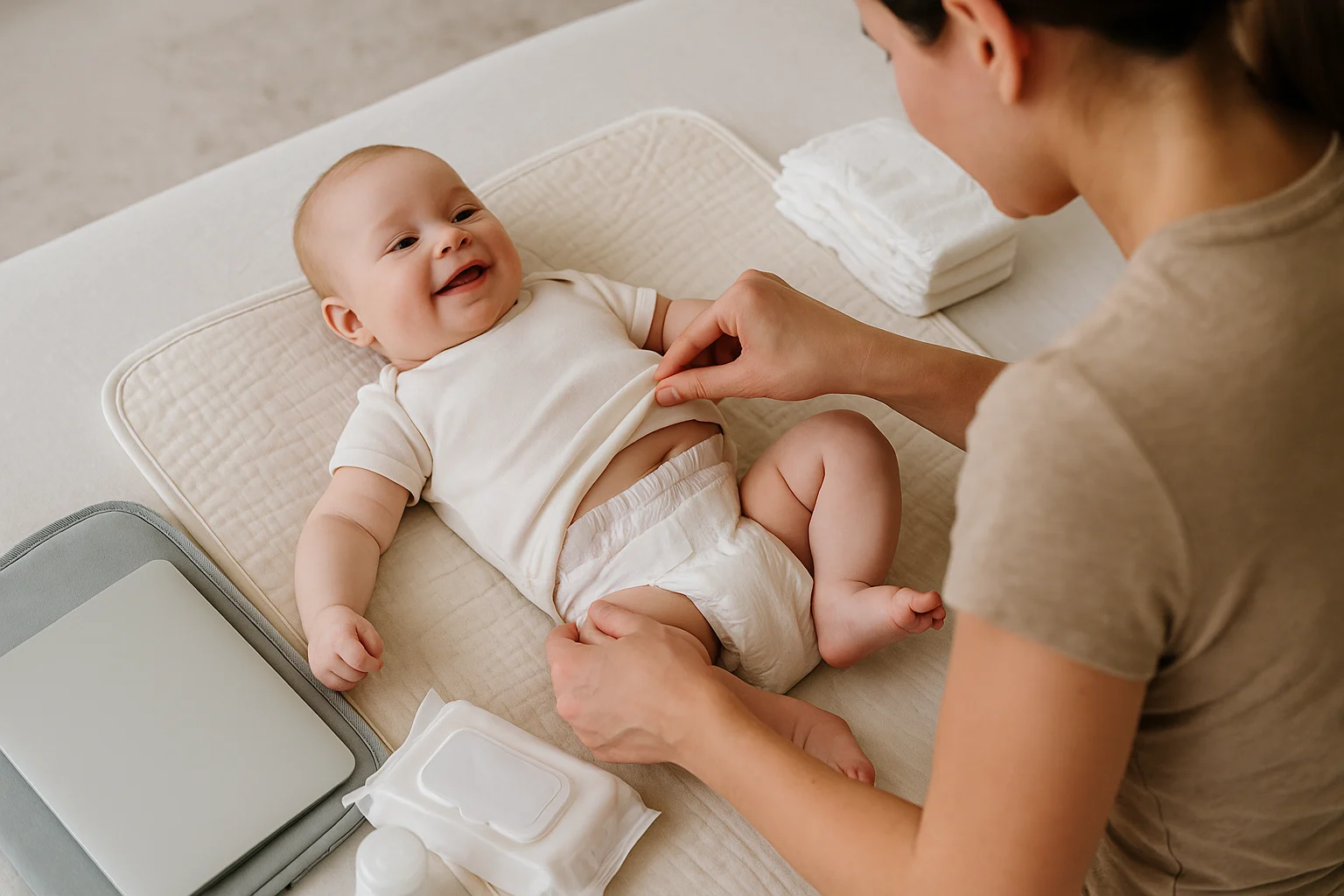
You’re sleep-deprived, your baby just peed again, and you’re staring at the diaper wondering, “Do I need to change it now or can it wait?” If that sounds familiar, you’re not alone. Every new parent has stood in that exact spot, wondering what’s best without overthinking it.
Quick answer: No, not every single time
You don’t need to change your baby’s diaper after every pee. Disposable baby diapers are built to handle more than one wetting, and changing after every pee could lead to waste and stress without much added benefit—unless your baby has sensitive skin or is a newborn.
That doesn’t mean you ignore pee altogether. It means you don’t need to jump into action every time you hear that trickling sound. There’s a smarter way to handle it.
What happens if you leave pee for a while?
Leaving a wet diaper on too long can cause diaper rash, skin irritation, and discomfort, especially if your baby’s skin is sensitive. But one wetting isn’t likely to cause harm if the diaper’s absorbent and not soaked.
Think of it like this—diapers are like sponges. The first few drops get soaked up fast and stay locked inside. But once the sponge is full, things start to get squishy. So if the diaper feels heavy or soggy, it’s time. If it still feels mostly dry, you’re probably okay to wait.
Some babies pee a little at a time. Some let it out in one big go. If your baby tends to dribble all day, you’ll be changing more often. If they pee in big bursts every few hours, you can time it better.
Diapers today are built to hold it
Modern diapers like Pampers or Velona Cuddles aren’t like cloth ones. They’re built with layers that pull moisture away from the skin fast.
That means even if your baby pees, their skin isn’t sitting in it. The liquid gets trapped in the gel layer, and the surface stays dry to the touch.
Also, most brands now have a wetness indicator. That line that changes color isn’t just for show. It helps you figure out whether the diaper’s really full or just a little damp.
But don’t rely on it alone. Feel the weight of the diaper. If it feels full or saggy, change it. It can probably wait if it’s light and your baby isn’t fussy.
What about poop and nighttime changes?
Poop diapers always need to be changed right away. At night, if your baby only peed and is sleeping well, you can usually wait until morning unless the diaper is very full or causing leaks.
Poop is the real enemy here. It irritates skin fast, and mixing it with pee makes it worse. Always change a dirty diaper as soon as you know.
Nighttime’s a little trickier. Waking a baby who’s sleeping soundly just to change a slightly wet diaper usually backfires. Unless your baby has rash issues or the diaper is soaked through, let them sleep.
If they wake up for a feed, do a quick check. If the diaper’s heavy or you smell something, change it. If it feels dry or just mildly damp, leave it alone and save yourself the crying and missed sleep.
When pee leads to diaper rash
Pee can lead to diaper rash if the diaper’s left too long, especially in humid weather or if your baby has sensitive skin. It helps to use a barrier cream and keep diaper changes regular, even if it’s not after every pee.
Think of your baby’s skin like soft fruit. It bruises easily, and sitting in moisture makes it worse. If you’re seeing red patches, raw spots, or if your baby flinches when wiped, you’re probably dealing with a mild rash.
You don’t have to panic. Use a gentle cream with zinc oxide. Keep changes steady, maybe every 2 to 3 hours in the daytime, and give the skin some air when possible.
The idea isn’t to change every single time your baby pees. It’s to not let wetness sit for hours and get trapped in creases. A little common sense goes a long way here.
How often should you change during the day?
There’s no perfect number. But here’s a quick guide based on age and feeding:
| Baby’s Age | Wet Diapers/Day | Change Every… |
|---|---|---|
| 0–1 Month | 6–10 | Every 2–3 hours |
| 1–6 Months | 5–8 | Every 3 hours max |
| 6–12 Months | 4–6 | Every 3–4 hours |
These are ballpark numbers. You’ll figure out your baby’s rhythm fast. Some pee right after feeding. Some go all at once. Some babies hate being even a little wet and will let you know.
Let your baby’s mood be your guide too. If they’re happy and dry to the touch, you’re probably good.
How long can a pee diaper stay on?
A wet diaper can usually stay on for 2 to 3 hours during the day and up to 6–8 hours at night if it’s only slightly wet and your baby’s sleeping well.
Now, that’s assuming the diaper is good quality and your baby isn’t having skin issues. Once your baby starts solids or if they get diaper rash easily, you’ll want to be more cautious.
You’ll also notice some diapers swell up big but still feel dry. That’s normal. But if the waistband starts to droop or the legs feel wet, change it even if your baby doesn’t complain.
How do you know if your baby’s uncomfortable?
Not every baby cries when wet. Some babies are chill, even if they’re sitting in pee. Others will fuss the second they feel a drop.
Here’s what to look for:
- Arching back or squirming a lot
- Tugging at the diaper area
- Skin that’s red or slightly damp at the waistband or legs
- Diaper feels heavy or warm
Trust your gut. If you’d feel weird sitting in that, your baby probably does too.
Do newborns need more frequent changes?
Yes. Newborns pee often, have sensitive skin, and usually need a diaper change every 2 hours—even for pee.
That’s because newborn skin is thin and breaks down fast. Also, they pee tiny amounts a lot of times a day, and even a little wetness can cause rash if it’s not dealt with quickly.
As your baby grows, their skin toughens up a bit. You’ll be able to stretch changes longer and adjust as needed.
What if you’re out and about?
You’re not always near a clean space or diaper bag. So what do you do when your baby pees and you’re nowhere near home?
If it’s pee only and your baby seems fine, don’t panic. You’ve got some wiggle room. Keep a spare diaper and wipes in the car or stroller. Get to it when you can.
If it’s poop, though, find a way to change it right away. Poop waits for no one.
Can you make diapers last longer?
Yes, by waiting until the diaper is reasonably full—but not overloaded—you’ll change less often without hurting your baby’s skin.
Don’t stretch things to the point of leaks or rashes. But there’s no need to toss a diaper that’s barely been used.
Change before and after long naps, after big feeds, and when you’re heading out. You’ll cover most wettings that way without running through a whole pack every day.
Final thoughts for first-time parents
Don’t stress yourself into a corner over pee. Diaper changing isn’t a game of perfection. It’s about balance.
Your baby won’t remember if you changed their diaper two minutes late. But your back and wallet might remember how often you jumped up for nothing.
If the diaper is light, your baby is chill, and the skin looks fine, leave it be for a bit. Waiting an hour or two is not wrong.
Trust your eyes, your hands, and your baby’s face. That’s all the advice you need.