


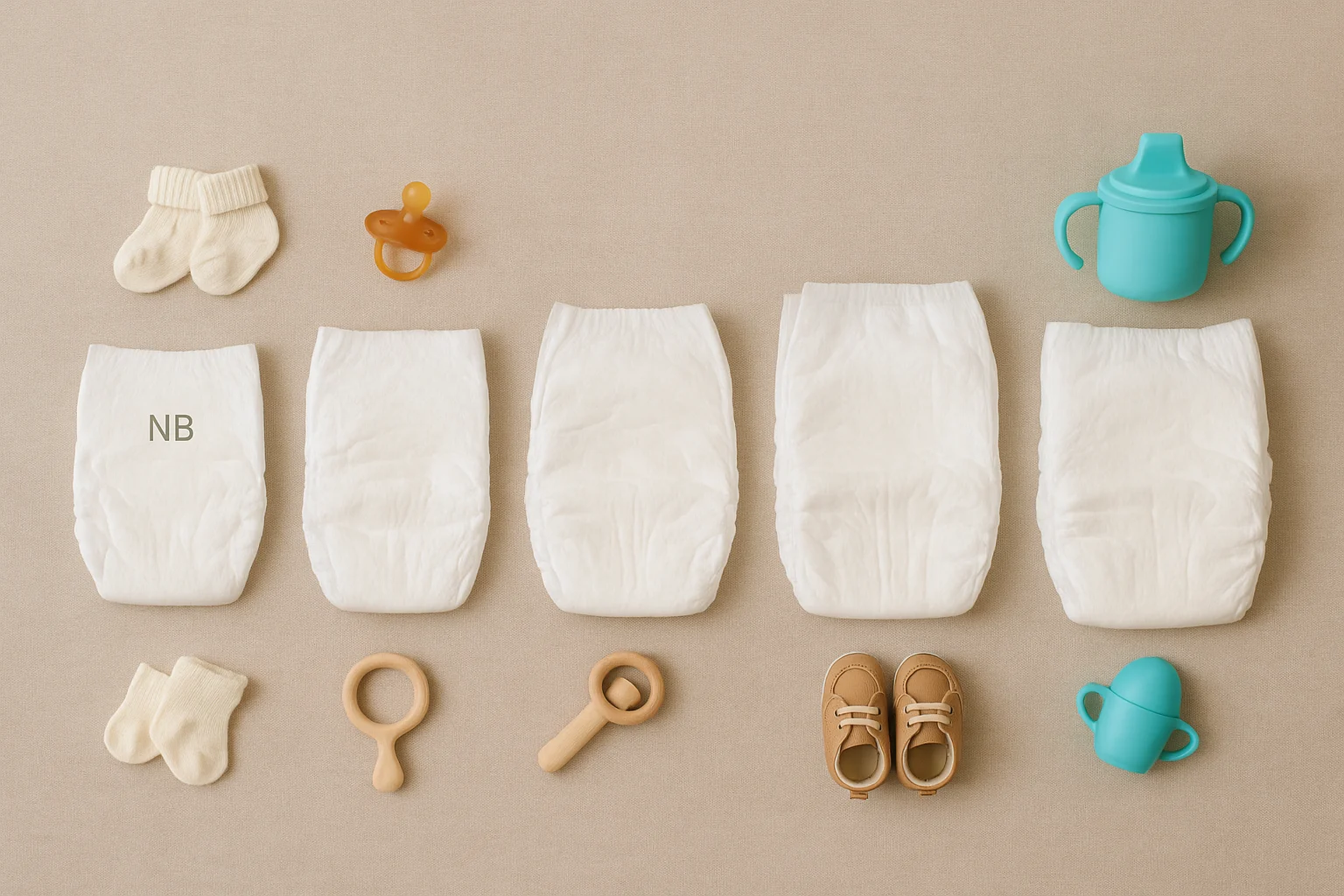
Picking the right diaper size can feel like guesswork when holding a newborn and wondering why everything leaks. But it doesn’t have to be. Diaper sizing is simpler than it looks, and once you know how to read the label and watch your baby, you’ll never have to overthink it again.
Why getting the right diaper size matters
The right diaper size keeps your baby dry, stops leaks, avoids red marks, and makes life easier for everyone. If the diaper’s too small, it pinches. Too big, and it won’t stay put. Either way, you’re left with messes and an unhappy baby.
Bad fits cause rashes, blowouts, and unnecessary stress. When diapers fit well, you won’t need to check for leaks or constantly change outfits. This means your baby can sleep better, move more easily, and feel more comfortable daily.
Diaper size chart: What size does your baby need?
Diaper sizes are based on your baby’s weight, not their age. Every brand like (Pampers, Marvel, Baby Cheramy) uses slightly different weight ranges, but most follow the same general chart. Age can give you a clue, but the number on the scale matters more.
Here’s a simple size guide to help:
| Diaper Size | Baby’s Weight | Typical Age Range |
|---|---|---|
| Preemie | <6 lbs | Preemies/newborn NICU |
| Newborn | Up to 10 lbs | 0–2 weeks |
| Size 1 | 8–14 lbs | 0–2 months |
| Size 2 | 12–18 lbs | 2–6 months |
| Size 3 | 16–28 lbs | 5–24 months |
| Size 4 | 22–37 lbs | 18–36 months |
| Size 5 | 27+ lbs | 2–4 years |
| Size 6 | 35+ lbs | 3–5 years |
Diaper overlap is normal. A 14-pound baby could fit into size 1 or 2 depending on body shape. Go by fit, not just weight. Always check the fit around the waist and thighs. If you see marks on the skin, it’s time to move up.
When should you switch to the next diaper size?
You should size up when you see red marks, leaking, tight tabs, or your baby outgrows the weight range. If the tabs barely close or keep popping open, you’re already late to the party.
Other signs it’s time for a bigger size:
- Diaper leaves deep red lines on the legs or belly
- You notice frequent leaks even after changing regularly
- Baby’s cranky or fussy after putting on a fresh diaper
- Diaper sits too low in the back or slips down during play
Don’t wait for a bad blowout to make the switch. If you’re between sizes, try the bigger one. A little extra room is better than a tight squeeze.
Tips for new parents buying diapers
Start small, buy more later, and check the fit as your baby grows. Babies grow fast; what fits one week might not fit the next. It’s not worth stocking up on too many of one size.
Here’s what most first-timers get wrong—they buy in bulk based on age. That works for formula, not for diapers. One growth spurt and you’re stuck with two packs that don’t fit.
Keep these things in mind:
- Only buy small packs if you’re trying a new brand
- Don’t rely on age charts alone—use your baby’s weight
- Watch for sales, but don’t overcommit to one size
- Store extra diapers somewhere cool and dry to keep them fresh
Also, some brands fit snugger than others. Pampers tend to be slimmer, while Huggies are a bit more spacious. If one feels too tight even though you’re within the weight limit, try switching brands.
How often should you check diaper size?
Check the fit every time you change your baby. You’re already wiping and cleaning, so take another second to see if the diaper is still sitting right.
You don’t need to weigh your baby daily. But if the diaper is snug, the tabs are angled forward instead of sideways, or it looks like it won’t last another growth spurt, go one size up and try it out. You’ll know within a day if it’s a better fit.
Babies don’t stay in one size long. Newborns may outgrow their first diaper in two weeks, and size one might last a month or two. By the time they hit size 3 or 4, things slow down, but early on, sizes change fast.
Do you need to size differently for boys or girls?
Diaper sizes stay the same, but the fit might differ for boys and girls. Boys may need a snugger fit up front to avoid leaks, while girls need better side coverage. Some brands even make gender-specific diapers, but most work fine for either.
If your baby’s leaking often in the same spot, try adjusting the fit. For boys, point the penis downward before taping the diaper. For girls, ensure the leg gathers are tucked out, not in.
What if your baby is between sizes?
If you’re stuck between sizes, go with the bigger one. It’s easier to fasten a diaper that’s a bit loose than stretch one that’s too small.
Tight diapers cause way more problems than loose ones. You can always tighten the tabs but can’t stretch the diaper if it doesn’t go around the waist properly.
If unsure, try a small pack of the next size up and test it for a day or two. Watch for leaks or gaping at the legs, but the bigger size will probably work better and feel more comfortable for your baby.
Final thoughts
Understanding diaper sizes isn’t hard once you stop guessing and start checking the label. Go by your baby’s weight, not age. Keep an eye on the fit every time you change them. Switch sizes when the diaper leaves red marks or leaks. Don’t stockpile one size. And don’t overthink it. Every baby’s built a little differently. What fits one may not fit another, and that’s fine.
You’ll get better at spotting the signs with time. Until then, trust the chart and the fit, and when in doubt, size up.