


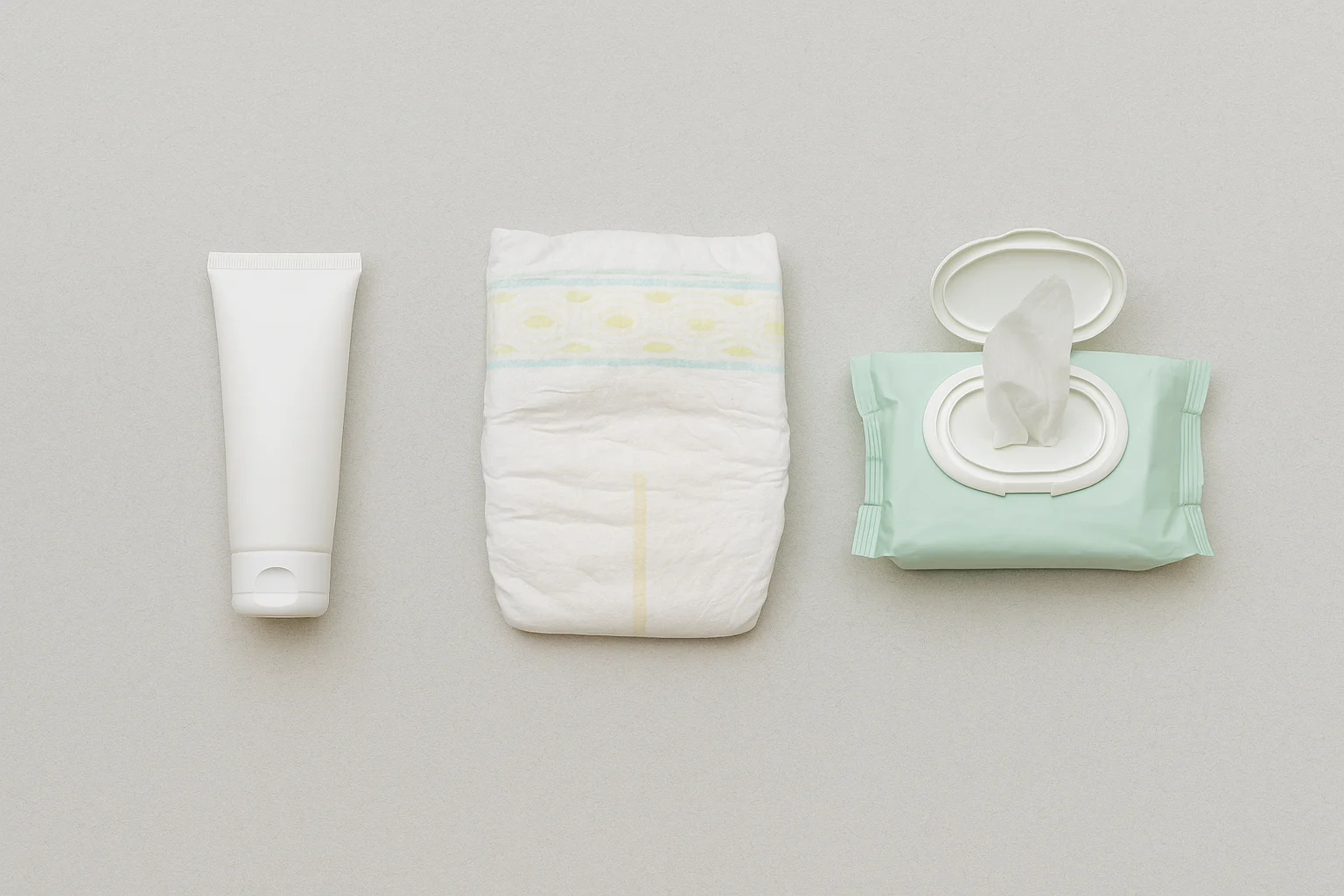
If your baby’s bum looks red, feels warm, or makes them cry during diaper changes, you’re not alone. Diaper rash is one of the most common things new parents deal with. It looks worse than it is, but it stings like crazy for babies. To stop it, you’ve got to know what’s causing it.
First off, what exactly is diaper rash?
Diaper rash is skin irritation caused by too much moisture, rubbing, or contact with poop and pee. It shows up as red, inflamed, or bumpy skin in the diaper area.
You’ll usually see it on the butt, thighs, or genitals. Sometimes it looks like flat redness. Sometimes it has little bumps. Your baby might cry during changes or seem fussy when their diaper is wet. That’s their way of saying it hurts.
It’s not a disease. It’s not a sign of poor hygiene. But it can make both baby and parent miserable if left untreated.
Cause #1 – Staying in a wet or dirty diaper too long
The biggest cause of diaper rash is letting pee or poop sit against the skin too long. Wet diapers break down skin fast.
Urine on its own can irritate skin. Mix in poop, and you’ve got a recipe for rash. Poop contains enzymes that eat through the skin barrier if left too long. This happens more often when diaper changes are delayed.
Sometimes, it’s not your fault. Maybe your baby sleeps longer than usual or has diarrhea. But if baby diapers aren’t changed often enough, moisture builds up, the skin gets soggy, and rashes follow.
Newborns may need 10 to 12 changes a day. Even if it feels overkill, that keeps the rash away.
Cause #2 – Rubbing and friction
Diapers that rub or squeeze can chafe the skin, especially around thighs and waistbands. This leads to irritation, even if the diaper’s clean.
If a diaper’s too tight or if your baby kicks a lot, you’ll get friction. That constant rubbing wears down the top layer of skin, making it easy for moisture and bacteria to slip in.
You might notice red lines or raw spots where the diaper edges press. That’s friction burn. Heat makes it worse. Summer babies sweat more, which softens the skin and makes rubbing more painful.
Go for a snug but not tight fit. If you can slide a finger between the diaper and the belly, you’re good.
Cause #3 – Chemicals in diapers, wipes, and lotions
Some diaper rashes come from harsh ingredients found in wipes, soaps, or even the diaper material itself.
These are called irritant rashes. They’re triggered by things like alcohol, fragrance, dyes, or preservatives. If your baby gets a rash right after switching brands or using a scented wipe, chances are it’s from chemicals.
Even products labeled “natural” or “gentle” can cause a reaction. Baby skin is picky. What works for one baby might wreck another.
Stick to fragrance-free, alcohol-free products. Test new items on a small area first. If you spot redness or your baby cries during cleaning, stop using it.
Cause #4 – Allergic reactions to diaper materials
Allergic diaper rashes are caused by a true skin allergy to something in the diaper, like latex, adhesives, or synthetic fibers.
These are less common but more stubborn. They don’t go away with usual creams. The skin looks inflamed, maybe even swollen, and the rash spreads beyond the diaper zone.
The tricky part? Allergic and irritant rashes look alike. You may need to try switching to a hypoallergenic diaper or cloth diaper to figure it out.
Allergic reactions can also come from laundry detergent if you’re using cloth diapers. Go with something dye-free and baby-safe.
Cause #5 – Yeast infections in the diaper area
Yeast diaper rash happens when Candida (a fungus) grows too much in warm, damp skin folds. It usually starts after a regular rash.
If the rash won’t go away with normal care, turns bright red, and has little red dots or raised edges, it’s probably yeast. It loves damp skin, especially in the groin folds and butt crack.
Candida is always on the skin, but when the skin’s broken or moist for too long, it multiplies fast. Antibiotics can also trigger it by wiping out good bacteria that keep yeast in check.
This type of rash needs antifungal cream, not just barrier ointment. It won’t heal on its own.
Cause #6 – Bacterial infections (when things go beyond a rash)
If a diaper rash starts oozing, crusting, or turning yellow, it might be bacterial. These infections need medical treatment.
Bacteria like Staph or Strep can sneak into cracked or open skin and cause a more serious rash. You’ll notice fluid-filled blisters, scabs, or a raw open wound.
Your baby may also seem more upset, have a fever, or cry harder during diaper changes. This isn’t something to treat at home with regular cream. You’ll need a doctor and possibly an antibiotic cream.
Bacterial diaper rashes are rare but serious. Always keep an eye out for fast-spreading or crusty patches.
Cause #7 – Changes in baby’s diet
When your baby starts eating solids, their poop changes, and that can cause new rashes. Certain foods make poop more acidic or harder to clean.
Tomatoes, citrus, berries, and even bananas can irritate baby skin when they pass through in the stool. Some babies react to dairy or eggs too. If your baby’s rash flares after eating something new, that’s a big clue.
Breastfed babies tend to have fewer rashes, mostly because their poop is milder. Once solids enter the picture, everything changes. The same goes for formula changes.
Track what your baby eats. If a rash shows up within a day of trying a new food, try pausing it and see what happens.
Cause #8 – Antibiotics (baby or breastfeeding mom)
Antibiotics often lead to diaper rash because they mess with gut bacteria. This makes it easier for yeast to grow.
If your baby takes antibiotics or you’re nursing while on them, the meds can kill off helpful bacteria. That leaves room for yeast to take over, and suddenly you’re battling a rash that looks red, angry, and won’t quit.
Even if the baby doesn’t show side effects like diarrhea, the diaper area might react. You’ll want to keep the skin as dry as possible and watch for yeast signs.
Sometimes, probiotics can help restore the balance, but check with your pediatrician first.
Other less common causes worth noting
A few extra things can also trigger diaper rash, even if they’re not as common.
A diaper that’s too big or too small messes with airflow and causes rubbing. Cloth diapers washed with strong detergents can leave behind residue that irritates skin. Even teething can lead to looser stools, which leads to more rashes.
Some babies also react to new laundry products, especially if you change brands without realizing it. If nothing else explains the rash, don’t forget to check your washing routine.
Real-world signs to watch (Is it one cause or a mix?)
Diaper rash often comes from more than one cause. Moisture, rubbing, and poop all add up fast.
If your baby has redness in just one area, like where the diaper rubs, it could be friction. If it’s in folds and has dots, think yeast. If it’s crusty or weepy, it may be bacterial.
Take mental notes. Did you just try a new wipe? Is your baby teething and pooping more? Are they on meds?
You don’t need to be a detective, but tracking what’s new helps figure out what went wrong.
If it looks worse each day or won’t heal after a few days of changes, it’s okay to snap a picture and send it to your pediatrician.
Final thoughts: Knowing the cause is step one
You can’t fix diaper rash until you know what’s causing it. Moisture, rubbing, chemicals, and infections are the main culprits.
Once you know why the rash showed up, you can stop it faster and prevent it from coming back. Diaper rash looks scary, but it’s usually fixable with better timing, the right products, or a quick chat with your baby’s doctor.
You don’t need to panic. Just stay alert, act early, and trust that your baby’s skin will bounce back with a little help.