


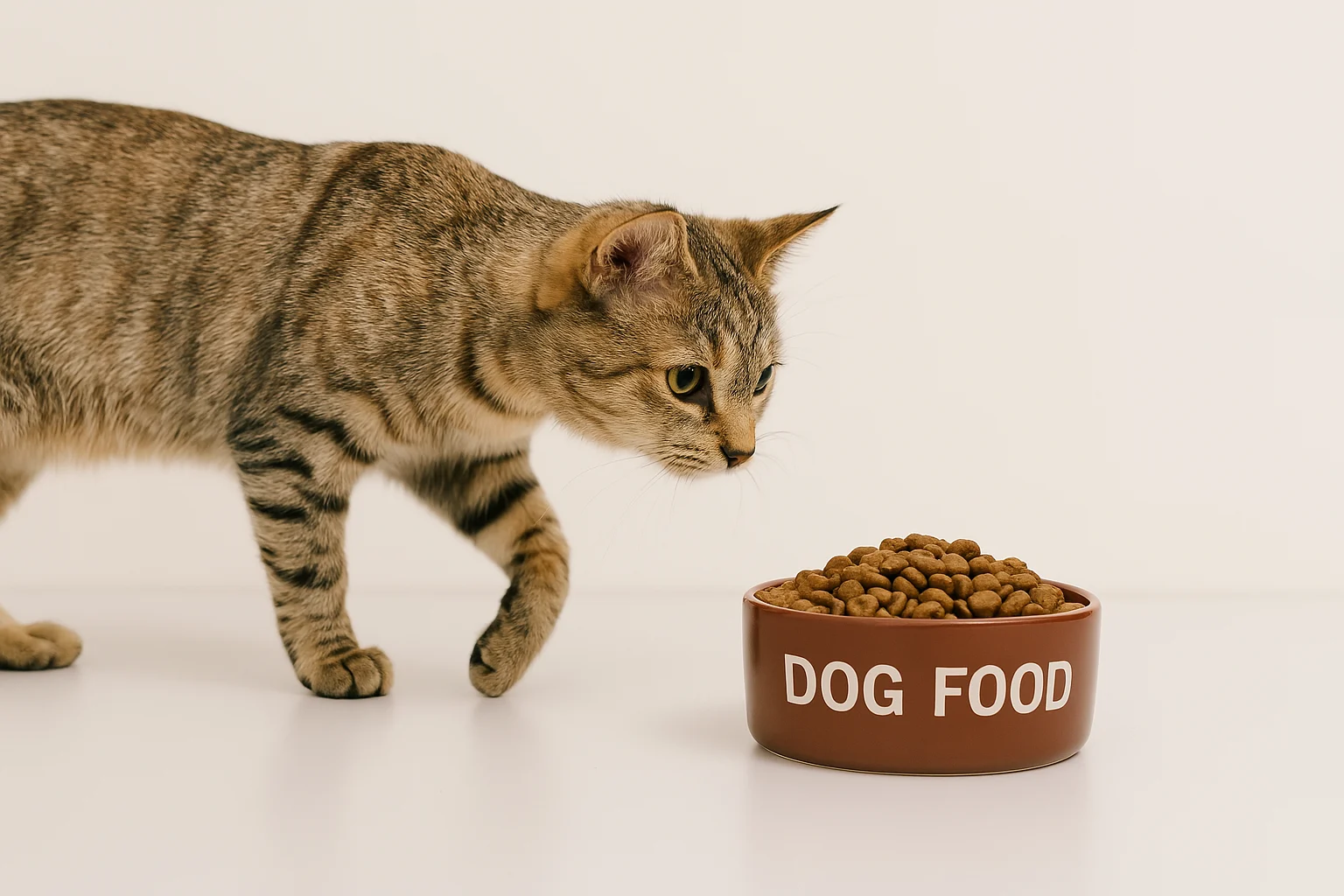
If you’ve got a cat and a dog, you’ve probably seen your cat trying to sneak bites from the dog’s bowl. It seems harmless, maybe even funny. But here’s the thing—it’s not a good habit and can cause real problems if it keeps happening.
What’s the difference between cat food and dog food?
Food that cats eat has more protein, taurine, vitamin A, and fatty acids, which cats need, while dog food lacks or doesn’t have enough of them.
Cats are strict meat-eaters. Their bodies are built to live off animal protein. They can’t make some nutrients independently, so they rely on their food to give it to them. Taurine, for example, keeps their heart and eyes working right. Without it, they’re in trouble.
Dogs are different. They can eat more types of food. They’re built to handle plants and grains along with meat. That’s why dog food isn’t as protein-packed and doesn’t always have enough taurine or vitamin A.
Dog food isn’t “bad” in itself. It’s just not made for cats. Giving dog food to a cat now and then won’t hurt them, but it won’t help them either. If it becomes a daily thing, health problems start showing up.
Is it safe for cats to eat dog food?
It’s safe in minimal amounts, but not daily. Long-term, dog food can make cats sick because it lacks nutrients.
You don’t need to panic if your cat takes a few bites from the dog’s bowl once or twice. It won’t hurt them. But if they’re eating it regularly or you’re feeding it by choice, you need to stop. The main risk is a lack of taurine, which cats need in their diet. Without it, they can develop heart disease, lose their eyesight, or get seriously ill.
Another risk is not enough protein. Cats burn through protein faster than dogs. So when they eat a lower protein food—like dog food—they’re not getting what they need to stay strong and healthy. Over time, this messes with their muscles, immune system, and energy.
Vitamin A is another big one. Cats can’t turn plant-based vitamin A into a form they can use. They need it ready to go, and dog food often doesn’t have enough. The same goes for arachidonic acid, a fatty acid found in meat that cats need for skin, fur, and organ function.
So yes, the odd bite won’t harm your cat. But regular dog food meals can leave them weak, sick, and short on what they need most.
How to stop your cat from eating dog food
The best way to stop it is to feed them in different spots and remove leftovers after meals.
If your cat and dog eat in the same room, your cat will probably check out the dog bowl. Most cats are curious and will taste anything they find. The first thing you can do is feed your pets in separate places. Put their bowls in different rooms if you can. If that’s impossible, feed your cat on a raised surface your dog can’t reach.
Stick to meal times. Give them their food, let them eat, and take the bowls away once they’re done. If you leave food out all day, you give your cat too many chances to snack from the wrong bowl.
You can also try feeding your dog in a crate or gated area. Your cat can’t get to the food even if they try. Some pet owners use special feeders that only open for one pet’s microchip. That also works, especially if you’re not always home during meals.
If your cat’s still pushing boundaries, try distracting it. Give it a toy or treat while the dog eats. This will keep it busy so it’s not tempted to steal a few bites.
Why do cats need their food?
Cats need food that’s made just for them because it gives them the exact mix of nutrients their bodies can’t make.
Think of your cat as a car that runs on diesel and your dog as one that runs on petrol. You wouldn’t mix up the fuel because it messes with the engine. It’s the same with their food.
Cat food is loaded with what cats need. That includes high animal protein, taurine, vitamin A, niacin, and specific fatty acids. If any of that’s missing, your cat doesn’t just feel off—they get sick. Dog food just isn’t built that way. It’s not poison, but it’s not a full meal.
Good-quality food like Whiskas cat treats keeps your cat’s coat shiny, eyes clear, energy high, and organs working properly. You won’t get that by cutting corners or swapping out the food with whatever the dog’s having.
You might think it saves time or money, especially if your cat likes the dog’s food. But over time, it costs more in vet bills, stress, and your cat’s well-being.
What could happen if your cat eats dog food regularly?
If your cat keeps eating dog food, they could have heart disease, poor vision, weak muscles, dull fur, or worse.
The most significant danger is taurine deficiency. Without taurine, cats develop a heart condition called dilated cardiomyopathy. It’s a big word, but it means the heart gets weak and stretched out. That can lead to heart failure.
Cats can also lose their eyesight when they don’t get enough taurine and vitamin A. They might act tired, stop playing, or not eat as much. Their coat might go dull, and they might lose muscle. These things take time to show, which is why it’s so easy to miss if your cat’s been eating the wrong food for months.
When you notice something’s wrong, the damage might already be done. That’s why feeding them right in the first place is so important.
What’s the bottom line?
Cats need their own food; dog food isn’t a safe replacement. Keep their meals separate and stick to what’s made for them.
It might seem small—your cat nibbling from the wrong bowl—but it adds to what they eat every day. Dog food isn’t dangerous by the spoonful, but it’s not right for a cat’s system, and it won’t keep them healthy long-term.
Feed your cat a complete, balanced cat food that meets their needs. Keep the dog food out of reach. Pay attention to what they eat, especially if you have both pets in the same space.
A little planning goes a long way. Your cat will be healthier, happier, and less likely to sneak around looking for a snack that doesn’t suit them.
Ask your vet if you ever feel unsure about what your pets should eat. They’ll give you the answers that fit your pets—not just what works for someone else’s.